

8 min read
Disclosure: As an Amazon Associate and eBay Partner Network publisher, we earn from qualifying purchases. This doesn’t affect what we recommend or how we describe it.
Off-grid homeowners, RV travelers, and cabin dwellers all face the same problem when it comes to backup or primary power: how to keep the lights on reliably, without breaking the bank or getting stuck in a supply crunch. Dual fuel generators promise flexibility—running on either gasoline or propane—but does this versatility justify their higher price and added complexity? If you’re weighing the trade-offs, you’re likely trying to avoid running out of fuel during a storm, limit your generator’s maintenance headaches, or stretch your power budget as far as it will go. Here’s what you need to know to make a confident decision, whether you’re powering a weekend camp, a full-time off-grid home, or just keeping your food cold during a blackout.
Spot the difference between dual fuel and single fuel generator setups
| Configuration | Rated Output (W) | Run Time @ 50% Load | Fuel Flexibility | Weight (lbs) | Price |
|---|---|---|---|---|---|
| Standard Gasoline Only | 3500 | 10 hrs (3.5 gal) | Gasoline only | 95 | $ |
| Basic Propane Only | 3000 | 12 hrs (20 lb tank) | Propane only | 105 | $$ |
| Dual Fuel Portable | 4000 (gas) / 3600 (propane) | 9 hrs (gas) / 14 hrs (propane) | Gasoline & Propane | 110 | $$$ |
| Inverter Dual Fuel | 2200 (gas) / 1800 (propane) | 8 hrs (gas) / 10 hrs (propane) | Gasoline & Propane | 55 | $$$ |
Note on pricing: the $ symbols are relative tiers within this comparison — $ is the cheapest of the bunch, $$$ the priciest. Live listings (and exact prices) appear further on.
Choose the right generator based on your real needs
Every generator category above suits a different type of user. Gasoline-only models are usually the cheapest up front and pack a punch for their size, but you’re limited to whatever gas you can store—tricky for long-term outages or remote cabins. Propane-only units burn cleaner and store fuel almost indefinitely, but you lose some power output and may struggle to find propane in certain areas if you run out. Dual fuel models offer the flexibility to switch between gasoline and propane, often without tools or downtime, at the cost of a higher price tag and a few extra pounds.
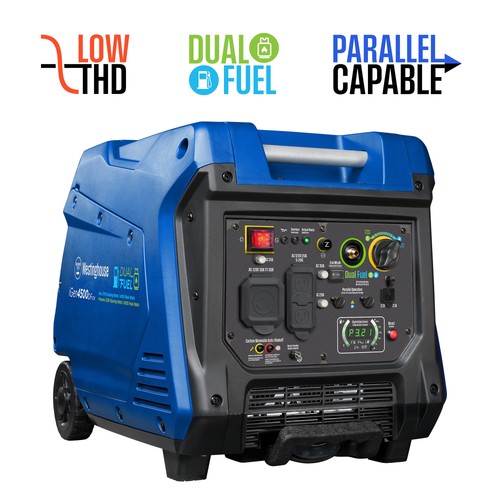
Inverter dual fuel generators fill a niche for those who need quiet operation and clean power for sensitive electronics—think laptops, CPAP machines, or modern fridges. You give up some wattage and pay a premium, but the peace of mind can be worth it if you’re running gear that doesn’t like voltage spikes.
Compare optionsTotal cost of ownership
The sticker price is only half the story with generators. Here are the most common ongoing or hidden costs you should factor in before you buy:
- Fuel costs: Gasoline prices fluctuate wildly, and propane is usually more stable but can be higher per BTU. A 4000W dual fuel generator burning 2 gallons of gas per 10 hours could cost $8–$12/day to run, while propane might run $15–$20 for the same period depending on local rates.
- Oil changes and filters: Most portable generators require an oil change every 50–100 hours. Budget $10–$30 per year for oil and $5–$10 for a new air filter if you run your generator weekly or during a long outage.
- Spark plugs and maintenance: Plan on $5–$15 per year for spark plugs and minor tune-ups. Propane burns cleaner, so dual fuel units often need less frequent plug changes if you mostly run on propane.
- Propane hoses and fittings: The rubber hoses that come with dual fuel generators can dry out or crack if left in the sun or exposed to winter cold. Replacements run $15–$25 every 2–3 years.
- Storage and stabilizer additives: Gasoline left in a tank can gum up carburetors. Plan on $5–$10 per year for fuel stabilizer if you store gas for emergencies.
Factor in these costs over the lifetime of the generator—often 5 to 10 years—to get a true sense of what you’re signing up for. For more on generator maintenance and running costs, see the Consumer Reports generator section.
Weigh the real-world pros and cons of dual fuel generators
Dual fuel generators are not just a marketing gimmick. The ability to switch fuels can be a lifesaver in a prolonged blackout or when you’re miles from the nearest gas station. Propane is safer to store long-term (it doesn’t go stale like gasoline), and in some rural areas, you can get it delivered in bulk for less hassle. On the flip side, most dual fuel units lose about 10–20% of their rated wattage when running on propane due to lower energy density. You’ll also pay a premium on the initial purchase—often 20–30% more than a comparable single-fuel model.
Another often-overlooked factor: dual fuel generators tend to be more complex, with extra regulators, hoses, and switches that can fail. If you’re comfortable with a little extra maintenance and want maximum flexibility, the trade-off is usually worth it. For those who value simplicity or want the lightest, cheapest option, a single-fuel generator might be a better fit.
See today’s dealsRelated Guides
- Our guide to Gas vs Propane Generators: Which Fuel Is Better for Off-Grid Power?
- Solar Powered Fans That Are Actually Worth Buying
- The 10 Best Inverter Generators for Reliable Off-Grid Power
- The Best RV Power Converters Worth Buying
- Our guide to 5 Portable Solar Generators for Reliable Off-Grid Power
- Our guide to Air-Cooled vs Liquid-Cooled Generators: What’s the Real Difference?
- Browse all Off Grid Generators →
How to size a dual fuel generator for off-grid power
Before you buy, make a list of what you want to run—fridge, well pump, lights, microwave, or power tools. Add up the starting (surge) and running wattages. A typical off-grid cabin might need 2000–3000 running watts (more if you have a deep well pump or electric heat). Most dual fuel portables are in the 3500–5000W range, covering the basics for a small house or RV. If you need to run a central AC, look for models with at least 5000–7000 starting watts. Always size for the highest load you’ll run at once, not just the sum of everything you own.
Check current pricesFAQs: Dual fuel generators in real-world use
How long can I run a dual fuel generator on a 20 lb propane tank?
Most 3500–4000W dual fuel generators will run 10–14 hours at half load on a standard 20 lb propane tank. Actual run time varies with load—heavier loads burn through propane faster. For longer outages, keep extra tanks on hand or consider a larger (40 lb) tank.
Is there a power difference between gasoline and propane?
Yes. Dual fuel generators typically produce about 10–20% less wattage on propane compared to gasoline. For example, a unit rated at 4000W on gas might deliver only 3200–3600W on propane. Always check both ratings to make sure you won’t overload the generator on propane.
Which is better for emergencies—dual fuel or single fuel?
Dual fuel generators offer more flexibility in an emergency since you can switch fuels based on what’s available. If you live in a region prone to long outages or fuel shortages, the ability to use both gasoline and propane is a real advantage. Single-fuel models are simpler and cheaper, but you’re out of luck if your only fuel runs out.
What kind of maintenance do dual fuel generators need?
You’ll need to change oil regularly (every 50–100 hours), check air filters, and inspect hoses and fittings for leaks or cracks. Propane burns cleaner than gasoline, so spark plugs and carburetors may last longer if you use propane most of the time. Always follow the maintenance schedule in your owner’s manual.
Are dual fuel generators compatible with off-grid solar systems?
Yes, you can use a dual fuel generator as a backup to charge battery banks or run loads when solar output is low. Make sure the generator’s output matches your inverter’s input requirements, and never connect a generator directly to a home’s wiring unless you have a properly installed transfer switch. For more on safe integration, check resources from the National Fire Protection Association.
What warranty and support issues should I watch for?
Warranties on dual fuel generators typically run 2–3 years, but coverage can be voided by improper use or skipped maintenance. Check if replacement parts and service are available in your area. Some off-brand models have limited support, making repairs difficult if something breaks down after the first year.
So—are dual fuel generators worth it for off-grid power?
If you value flexibility, need to store fuel long-term, or want a backup plan in case one fuel source runs out, dual fuel generators are usually worth the extra investment. They’re especially valuable for remote cabins, full-time off-grid homes, or anyone who can’t risk being without power. However, if price is your top concern and you have reliable access to gasoline or propane, a single-fuel generator may be easier on your wallet. As with any off-grid setup, the right answer depends on your fuel logistics, power needs, and appetite for ongoing maintenance. Make your choice with eyes open—and you’ll be far less likely to regret it when the next outage hits.



Last updated: June 2026 · About our research