9 min read
Disclosure: As an Amazon Associate and eBay Partner Network publisher, we earn from qualifying purchases. This doesn’t affect what we recommend or how we describe it.
Weekend campers want something light and easy to carry. RV owners need power for fridges and CPAPs through the night. Off-grid homeowners want a real backup that can keep the lights (and maybe the well pump) running for days. That’s why “portable solar generator” means very different things to different people—and why picking the right one is all about matching the specs to your real-world needs.
Top picks at a glance
- EcoFlow Solar Generator RIVER 2 256Wh with 110W Solar Panel — the most compact and portable choice
- Bluetti AC50P 504Wh/700W Portable Power Station Solar Generator — best for light off-grid use
- Bluetti AC180 1152Wh Power Station Generator — a step up in capacity for longer trips
- EcoFlow DELTA Pro 3600Wh Power Station Generator — the heavy-duty pick for whole-home backup
Where the real differences show up: Capacity, weight, and use-case
Every solar generator on this list can charge from the sun, but their power output, battery size, and portability differ dramatically. The smallest is a lightweight grab-and-go option for phones and lights. The biggest can power a refrigerator for a day or serve as whole-home backup in a blackout. If you want to avoid paying for capacity you’ll never use—or running out of juice at the worst moment—start by zeroing in on your actual watt-hour needs.
The top 5 portable solar generators compared
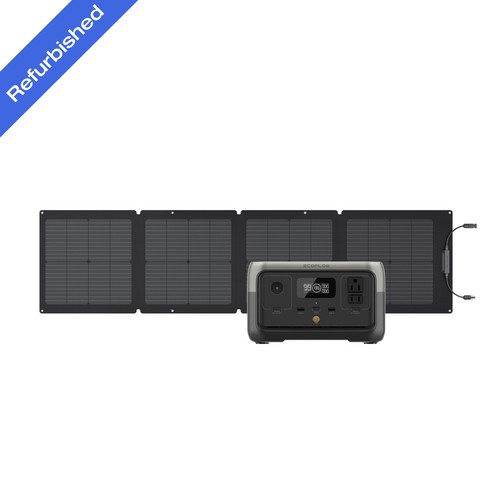
Pictured: EcoFlow RIVER 2
| Product | Condition | Price | Best For | Capacity (Wh) | Weight (lbs) |
|---|---|---|---|---|---|
| EcoFlow Solar Generator RIVER 2 256Wh with 110W Solar Panel |
Certified – Refurbished | $ | The most compact and portable choice | 256 | 7.7 |
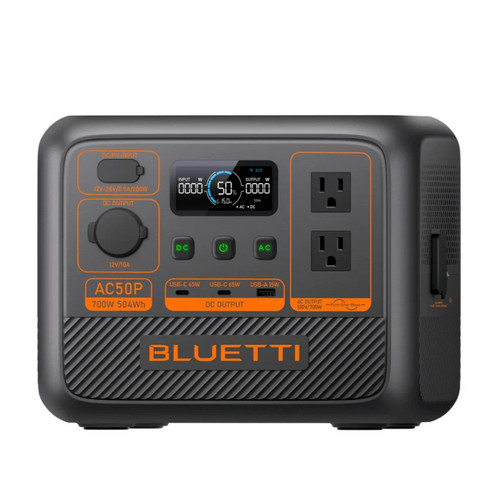 Bluetti AC50P 504Wh/700W Portable Power Station Solar Generator Bluetti AC50P 504Wh/700W Portable Power Station Solar Generator |
New | $ | Best for light off-grid use | 504 | 13.6 |
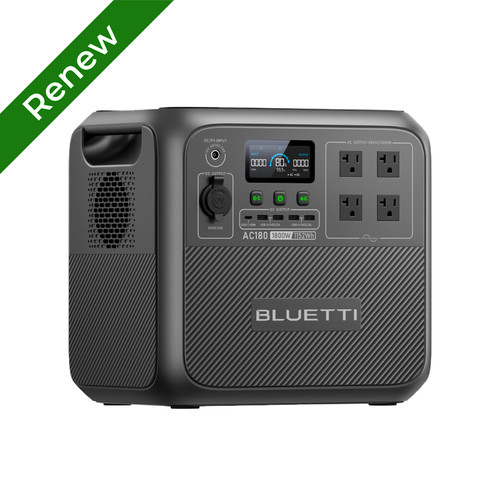 Bluetti AC180 1152Wh Power Station Generator Bluetti AC180 1152Wh Power Station Generator |
Used | $$ | A step up in capacity for longer trips | 1152 | 35.3 |
 EcoFlow DELTA Pro 3600Wh Power Station Generator EcoFlow DELTA Pro 3600Wh Power Station Generator |
Very Good – Refurbished | $$$ | The heavy-duty pick for whole-home backup | 3600 | 99 |
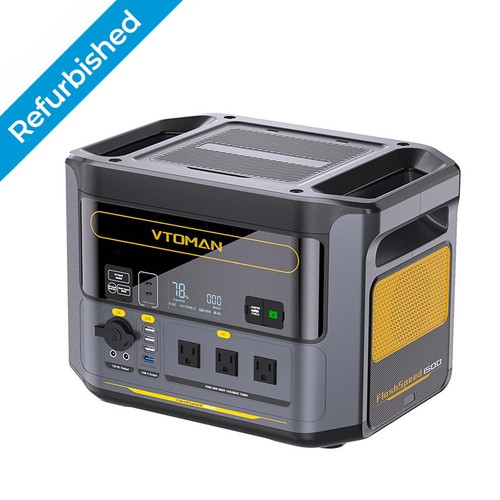 VTOMAN FlashSpeed 1500 Portable Power Station 1548Wh LiFePO4 Solar Generator VTOMAN FlashSpeed 1500 Portable Power Station 1548Wh LiFePO4 Solar Generator |
Certified – Refurbished | $$ | The best value for mid-size needs | 1548 | 39.7 |
Pricing key: $ marks the budget tier, $$ the mid-range, $$$ the premium picks. Tiers are relative to the products in this comparison; actual prices update live below.
What most buying guides get wrong about “portable”
Many guides lump every battery box with a handle under “portable,” but there’s a world of difference between a 7-pound power bank and a 99-pound home backup unit. If you need something you can carry with one hand—even after a long hike—the EcoFlow RIVER 2 is the only truly grab-and-go pick here. At just 7.7 lbs and 256Wh, it’s sized for phones, tablets, headlamps, and maybe a small USB fan. You’ll get a few days of phone charges or a night or two of LED lighting, but don’t expect it to run a fridge or power tools. It also comes with a 110W solar panel, which is about as much as you can reasonably set up at a campsite or on a picnic table.
Step up to the Bluetti AC50P and you’re still in the “easy to move” category, but with double the usable capacity—504Wh. At 13.6 lbs, it’s manageable for most adults and covers small appliances (CPAP, laptop, camera batteries) for a weekend trip. The AC50P’s 700W inverter means you can run devices that need a bit more startup power, but you’ll still want to stick to loads under 300W for longer runtimes. This is the sweet spot for digital nomads and car campers who don’t want to haul a mini-fridge but need more than a phone charger.
How much capacity do you actually need?
The difference between a 500Wh and a 1500Wh solar generator is the difference between running a fan all night or running a fridge for a day. The Bluetti AC180 jumps to 1152Wh and a 35.3 lb chassis—still moveable, but not something you’ll want to carry far from your vehicle. This gets you into the range where you can keep a mini-fridge, CPAP, or even a small TV powered overnight. The AC180 is a solid choice for RVers and off-grid cabins where weight is less of an issue, but you want reliable overnight power.
If you want even more capacity without going all the way to whole-home backup, the VTOMAN FlashSpeed 1500 offers 1548Wh. It’s the best value per watt-hour on this list, and at 39.7 lbs, it strikes a balance between capacity and portability. This is the pick for longer trips, family camping, or as a backup for sensitive electronics during outages. It uses LiFePO4 battery chemistry, which is known for longer cycle life and better safety compared to standard lithium-ion cells (learn more about LiFePO4 here).
When you need serious backup: The case for high-capacity solar generators
The EcoFlow DELTA Pro is in a different league. With 3600Wh of battery capacity and a 99 lb weight, this is not a “portable” generator in the sense of a day-hike accessory—it’s a home backup solution you can wheel into place when needed. This model is designed to run multiple large appliances for hours or even days, depending on load. Think refrigerator, lights, internet, and some medical devices during an extended outage. It’s also expandable with extra batteries (sold separately) if you want even more runtime. For whole-home backup and anyone dealing with frequent grid outages, this is the most robust option on the list.
Hidden trade-offs: Refurbished, used, and new—what’s the difference?
Not every product here is brand new. The EcoFlow RIVER 2 and VTOMAN FlashSpeed 1500 are “Certified – Refurbished,” which usually means they’ve been inspected, tested, and restored by the manufacturer or an authorized shop. The Bluetti AC180 is listed as “Used,” so expect some cosmetic wear, but you’re getting a higher-capacity unit at a lower price tier. The DELTA Pro is “Very Good – Refurbished,” offering premium specs without the premium price of a brand-new unit. If warranty and battery cycle count matter to you, always check the listing details and seller policies before buying.
How we selected these solar generators for real-world use
This list focuses on five models that cover the spectrum from ultra-portable to full-home backup. The main criteria: battery capacity (in watt-hours), inverter output (how much power you can draw at once), weight, battery chemistry, and included solar charging capability. For each, we researched the published specs, manufacturer recommendations, and market positioning. Only models with clear, stated specs and a track record of reliable performance were included.
We left out generic, unbranded units with vague or missing specs, as well as bundles that obscure what you’re actually getting. If you have demanding loads (well pumps, AC units, power tools), a portable solar generator may not be the right fit—look to hardwired battery systems or gas/propane backup instead. These picks are best for light to moderate off-grid use, camping, RVing, and short-term home backup.
For more on how solar generator specs translate to real-world use, check out Solar Electric Supply’s educational resources.
Related Guides
- Our guide to Difference Between Portable and Inverter Generators Explained
- Our guide to Solar Generators vs Gas Generators: Which Is Best Off-Grid?
- Our guide to Portable Solar Blankets That Are Actually Worth It
- Our guide to Portable Solar Blankets, Reviewed and Compared
- Our guide to Portable Solar Panels for Camping, Reviewed
- Gas vs Propane Generators: Which Fuel Is Better for Off-Grid Power?
- Browse all Off Grid Generators →
Total cost of ownership
The sticker price is just part of the equation when you’re budgeting for a solar generator. Here are the key ongoing or hidden costs to keep in mind:
- Solar panel upgrades or replacements: Entry-level models may include a small panel, but upgrading to higher-wattage panels (e.g., 200W or more) for faster charging can add $200–$400 per panel.
- Cables and adapters: Extra MC4 cables, extension cords, or adapters for specific devices can run $20–$60 per setup, especially if you want to charge from both solar and AC sources.
- Battery replacement (long-term): LiFePO4 batteries can last 2000+ cycles, but eventually, all batteries degrade. Expect to budget for a new battery every 5–10 years, depending on use; replacement costs can be 30–60% of the generator’s original price.
- Accessory replacements: Carrying cases, handles, and dust covers wear out over time. Plan for $30–$100 every 2–3 years if you use your generator frequently outdoors.
- Maintenance and storage: While these generators are low-maintenance compared to gas models, you’ll need to keep batteries topped off and stored at the right temperature. Occasional “health checks” or firmware updates (for smart models) may require time or technical support.
Factor these into your annual budget—especially if you rely on your generator for emergency preparedness or remote work.
FAQ: Common questions about portable solar generators
How long will a 500Wh solar generator run a CPAP machine?
With a typical CPAP drawing 30–60W, a 500Wh unit like the Bluetti AC50P can power a CPAP for 7–16 hours, depending on humidifier use and pressure settings. For multi-night trips, plan on recharging with solar each day or consider a larger capacity model.
Is the EcoFlow DELTA Pro worth it over the VTOMAN FlashSpeed 1500 for home backup?
The DELTA Pro offers more than double the capacity (3600Wh vs 1548Wh) and a much higher inverter output, making it far better suited for running large appliances or multiple circuits during an outage. The VTOMAN is a better fit for mid-size needs or longer trips where portability still matters.
What’s the real difference between “refurbished” and “used”?
“Certified – Refurbished” usually means the product has been professionally inspected and restored to like-new working order, often with a limited warranty. “Used” means the item has seen previous use but may not have been reconditioned or tested to the same standard. Always review seller terms for return and warranty details.
Can I use these solar generators with any solar panel?
Most models are compatible with a wide range of solar panels, but you need to match the voltage and connector type (often MC4 or proprietary). Check the product’s input voltage range—using a panel outside these specs can damage the unit or void the warranty.
How many years will a LiFePO4 battery last in daily use?
LiFePO4 batteries, like those in the VTOMAN FlashSpeed 1500, typically last 2000–3500 full charge cycles. With daily cycling, that’s 5–10 years before capacity drops to about 80% of original. Actual lifespan depends on temperature, depth of discharge, and storage habits.
Are these generators safe for sensitive electronics?
All five models here use pure sine wave inverters, which are safe for laptops, CPAPs, and other sensitive electronics. Avoid plugging in devices that exceed the inverter’s rated wattage, and always use surge protection for expensive equipment.
The bottom line: Which portable solar generator fits your needs?
If you’re backpacking or just want an emergency phone charger, the EcoFlow RIVER 2 is the most portable option. For light off-grid use—weekend camping, basic electronics—the Bluetti AC50P gives you more capacity without much extra weight. For longer trips or small appliances, the Bluetti AC180 and VTOMAN FlashSpeed 1500 offer serious runtime at a manageable size. If your priority is whole-home backup or running major appliances, the EcoFlow DELTA Pro stands out for its sheer capacity and expandability. Match your choice to your actual power needs, and don’t forget to budget for accessories, panels, and long-term battery life.



Last updated: June 2026 · Our research process