7 min read
Disclosure: As an Amazon Associate and eBay Partner Network publisher, we earn from qualifying purchases. This doesn’t affect what we recommend or how we describe it.
Battery monitors for off-grid setups range from $35 to over $300, yet a single wrong choice can leave you flying blind when your power drops, or worse—wreck your expensive batteries. Reliable monitoring is not a luxury off-grid; it’s your main defense against running out of juice on a cold night, over-discharging your investment, or misjudging how much solar you’re really making. This guide unpacks which battery monitors actually deliver the insight you need, how to size and match them to your system, and what pitfalls to avoid when shopping.
Choose the right battery monitor for your off-grid setup: Key types compared
| Category | Display Type | Shunt Rating | Data Logging | Price | Pros & Cons |
|---|---|---|---|---|---|
| Basic Voltmeter Panel | 3-digit LED | — | No | $ |
Pros: Cheap, installs anywhere, draws minimal power. Cons: Only shows voltage, no amp-hours, can’t track true battery state. |
| Shunt-Based LCD Monitor | Backlit LCD | 50–500A | Limited (24-48hr) | $$ |
Pros: Shows amps in/out, state of charge %, usable with most 12-48V banks. Cons: Needs precise setup, basic logging only. |
| Bluetooth-Enabled Monitor | App + LCD | 100–500A | 30+ days | $$$ |
Pros: Long-term data, remote monitoring, customizable alerts. Cons: Higher cost, requires smartphone/tablet. |
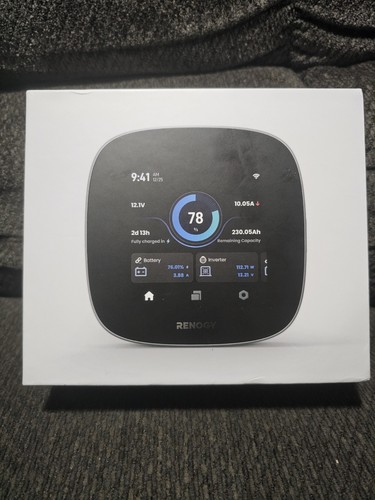
| All-in-One Power Station Display | Color LCD | Internal | Yes (varies) | $$$ |
Pros: Integrated, user-friendly, usually accurate for built-in batteries. Cons: Limited to that unit, can’t be used with DIY battery banks. |
$ / $$ / $$$ indicates budget / mid-range / premium relative to the picks above. Check live listings further down for current prices.
Spot the difference between true battery insight and guesswork
Not all battery monitors are created equal. Voltmeter panels are tempting for their low price and simple install, but voltage alone can’t tell you how many usable amp-hours are left, especially with lithium batteries where voltage stays high until nearly empty. For real off-grid reliability, you want a shunt-based monitor that tracks current in and out, calculates cumulative amp-hours, and shows state of charge (SOC) as a percentage.
Shunt-based monitors work by installing a precision resistor (the shunt) in your battery’s negative line. This lets the monitor count every amp flowing in or out, so you see not just what’s happening now, but how much energy you have left. For off-grid homes and serious van/RV builds, look for a shunt rated for at least 20% more amps than your inverter’s peak draw. For example: a 2000W inverter at 12V can pull up to 167A, so choose a 200A or 250A shunt.
Bluetooth-enabled monitors add remote viewing and deeper data logging. This is useful for tracking trends over weeks (like how much solar you’re actually harvesting), and for getting alerts if your batteries drop below a safe threshold. These models cost more, but for anyone who wants to avoid battery damage or surprise outages, the extra data is worth it. See today’s deals
Red flags in listings to walk past
- No shunt or unclear shunt rating: If the product doesn’t specify a shunt rating in amps (e.g., “100A shunt included”), assume it’s not a true amp-hour monitor. You won’t get accurate data without this.
- “Universal” voltage claims without details: Watch for listings that say “works with 8-80V” but never mention battery chemistry or system voltage. These are usually cheap voltmeters, not real monitors.
- Blurry or photoshopped display images: Sellers who don’t show real screen photos often hide a clunky, unreadable, or hard-to-install product.
- No mention of amp-hour or SOC readout: If the features only mention volts or “battery health,” you’re not getting a true monitor—just a voltmeter.
- Missing dimensions or unclear install instructions: Quality monitors always list physical dimensions and basic install guidance. If these are missing, expect headaches fitting the unit or unclear wiring.
Match your battery monitor to your system size and chemistry
The right battery monitor depends on your battery bank’s voltage, chemistry (lead-acid, AGM, LiFePO4, etc.), and max current. Most shunt-based monitors work with 12V, 24V, or 48V systems, but always check the spec sheet for compatibility. Lithium batteries, in particular, need accurate SOC readings, since voltage doesn’t drop much until the battery is nearly empty—a voltmeter won’t warn you in time.
For a 12V van or RV with a 100–200Ah lithium bank, a 100A shunt is usually plenty. For off-grid cabins with 400–800Ah at 24V or 48V, step up to a 200A or 500A shunt. Oversizing the shunt a bit is smart; it won’t hurt accuracy, and it keeps things cool if you ever run your inverter near its limits.
If your system uses multiple battery banks or a hybrid setup (solar + generator + alternator), look for a monitor that can track multiple sources or inputs. Some Bluetooth/app-based models allow you to tag different charging sources, which helps diagnose why your bank isn’t fully charging—or pinpoint if a solar array is underperforming. Compare options
Related Guides
- The Best Battery Monitors, Reviewed for Reliable Off-Grid Power
- The Best Solar Battery Maintainers for Reliable Off-Grid Power
- Power Station vs Deep Cycle Battery: Which Off-Grid Power Option Wins?
- The Best Portable Battery Boxes for Off-Grid Power
- Our guide to Flooded Lead Acid vs AGM Batteries: Which Is Right for Off-Grid Power?
- Understanding Battery Depth of Discharge: What It Means for Off-Grid Power
Don’t get fooled by “percent” displays—look for real amp-hour counting
SOC (“state of charge”) percentage readouts are only as good as the monitor’s amp-hour counting. Cheap displays sometimes just map voltage to a crude percent, which is wildly inaccurate for lithium batteries. A proper monitor uses a shunt to track every amp in and out, then calculates remaining capacity based on user-set battery size (in amp-hours).
For best accuracy, enter your battery bank’s true usable capacity (e.g., 280Ah for a 300Ah LiFePO4 bank with 93% usable range). Some monitors let you adjust for battery aging or set low-voltage alarms, which adds a layer of protection if you’re away from the system for days at a time. View what’s available
For a deep dive on battery monitoring technology and standards, check out Battery University—they offer detailed, up-to-date technical guides for both beginners and advanced users.
FAQs: Real-world questions about choosing and using battery monitors off-grid
How accurate are battery monitors for lithium vs. lead-acid banks?
Shunt-based monitors are highly accurate for both lithium and lead-acid batteries if installed and calibrated correctly. For lithium, accuracy is crucial since voltage stays flat almost until empty. Expect +/-1–2% error if you set the monitor up with the correct amp-hour rating and reset it after a full charge cycle.
How often should I recalibrate or reset my battery monitor?
For most shunt-based monitors, recalibrate at least every 1–2 months, or after any unusual event (like full battery replacement or a deep discharge). Some Bluetooth models prompt you to reset automatically after a full charge, which helps maintain accuracy.
Can I use a single monitor for a system with both solar and generator charging?
Yes—if you wire all charging and load paths through the shunt, a single monitor tracks total amps in and out, no matter the source. If your system has separate charging sources that don’t share a ground, you may need multiple monitors or a model that supports multi-bank tracking.
Basic voltmeter vs. shunt-based monitor: Which is better for a small camper setup?
A basic voltmeter is fine for lead-acid banks under 100Ah, where voltage roughly tracks state of charge. For lithium or larger banks, a shunt-based monitor is far superior—it shows actual amp-hours used, not just a voltage guess, and helps prevent accidental over-discharge.
What’s the typical lifespan of a battery monitor, and what causes them to fail?
Most decent monitors last 5–10 years. Failures are usually due to water ingress (in RVs/vans), cheap shunt components overheating, or display failure. Choose monitors with an IP54 or better rating if mounting outside or in damp environments, and always mount the shunt in a dry, protected spot.
What should I check before buying to ensure compatibility with my batteries?
Confirm the monitor’s voltage range (e.g., 8–70V for most 12/24/48V systems), shunt amp rating (at least 20% above your system’s peak draw), and adjustable amp-hour settings for your battery size. Also, make sure it supports your battery chemistry—some monitors have special modes for lithium or AGM.
Is it worth paying extra for Bluetooth or app-based monitoring?
For most full-time off-grid users or anyone managing a large battery bank, yes. Bluetooth/app monitors let you spot trends, catch problems early, and access data remotely. For short weekend trips or backup-only systems, a basic shunt-based model may be enough.
Where can I learn more about battery monitoring standards and best practices?
The North American Board of Certified Energy Practitioners (NABCEP) offers up-to-date resources on off-grid system monitoring and maintenance, including battery care guides and installer best practices.


Last updated: July 2026 · How we cover this topic