
9 min read
Disclosure: As an Amazon Associate and eBay Partner Network publisher, we earn from qualifying purchases. This doesn’t affect what we recommend or how we describe it.
The best solar generator kit for you depends on how much power you actually need, how portable you want your setup, and your budget. If you want a high-capacity, all-in-one solar generator for off-grid backup or RV use, the Jackery Explorer 1500 v2 Solar Generator with 100 Air Solar Panel stands out for its balance of usable storage and simplicity. For heavier-duty demands—running larger appliances or more devices at once—the ALLPOWERS 2400W Portable Power Station Generator With Foldable Solar Panel Kit is the most capable, but it comes at a premium price. On the other hand, the BALDR Solar Generator 300W Portable Power Station with 60W Solar Panel and EcoFlow 286Wh RIVER 3 Plus Portable Power Station Generator With 45W Solar Panel are both compact and affordable, with the BALDR kit offering more capacity for the money, and the EcoFlow River 3 Plus winning on pure portability. This guide breaks down which solar generator kit is best for different needs, what specs actually matter, and how these models stack up side by side.
Top picks at a glance
- Jackery Explorer 1500 v2 Solar Generator with 100 Air Solar Panel — the high-capacity, all-in-one kit
- ALLPOWERS 2400W Portable Power Station Generator With Foldable Solar Panel Kit — the heavy-duty, high-output option
- BALDR Solar Generator 300W Portable Power Station with 60W Solar Panel — the compact, budget-friendly choice
- EcoFlow 286Wh RIVER 3 Plus Portable Power Station Generator With 45W Solar Panel — the most portable, travel-ready kit
Capacity, output, and portability: What sets these kits apart
Solar generator kits vary widely in battery size, inverter power, and solar input—three factors that directly affect how useful they’ll be off-grid. Here’s how the current top options compare in the real world, and what kind of user each is best suited for.
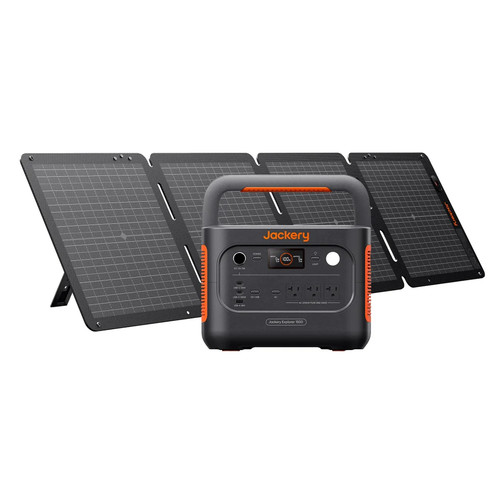
Pictured: Jackery Explorer 1500 v2
| Product | Condition | Price | Best For | Battery Capacity (Wh) | Max Output (W) |
|---|---|---|---|---|---|
| Jackery Explorer 1500 v2 Solar Generator with 100 Air Solar Panel |
New | $$ | High-capacity, all-in-one kit | 1512 | 1800 |
 ALLPOWERS 2400W Portable Power Station Generator With Foldable Solar Panel Kit ALLPOWERS 2400W Portable Power Station Generator With Foldable Solar Panel Kit |
New | $$$ | Heavy-duty, high-output option | 1500 | 2400 |
 BALDR Solar Generator 300W Portable Power Station with 60W Solar Panel BALDR Solar Generator 300W Portable Power Station with 60W Solar Panel |
New | $ | Compact, budget-friendly choice | 297 | 300 |
 EcoFlow 286Wh RIVER 3 Plus Portable Power Station Generator With 45W Solar Panel EcoFlow 286Wh RIVER 3 Plus Portable Power Station Generator With 45W Solar Panel |
New | $ | Most portable, travel-ready kit | 286 | 300 |
Pricing context: $, $$, and $$$ are relative ratings against the other products listed above, not absolute dollar ranges. Live current prices follow below.
Related Guides
- Our guide to How to Buy a Solar Generator: A Practical Guide for Beginners
- Our guide to Choosing the Best Solar Generator Kit for Home Backup Power
- Folding Solar Panel Kits That Are Actually Worth Buying
- Solar Charge Controller vs Solar Regulator: What’s the Real Difference?
- Our guide to Solar Generators vs Gas Generators: Which Is Best Off-Grid?
- How to Choose the Right Auto Start Module for Your Generator
- Browse all 12V Appliances →
Jackery Explorer 1500 v2: The balanced, all-in-one performer
With a 1512Wh battery and 1800W inverter, the Jackery Explorer 1500 v2 hits the sweet spot for most off-grid users who want a reliable, ready-to-use kit for backup power, van/RV living, or cabin stays. The included 100W Air Solar Panel is lightweight but will charge the battery slowly—expect a full recharge in 15–18 hours of good sunlight, so it’s best for topping up between uses rather than daily full cycles. The Jackery’s interface is user-friendly, and it supports up to 7 devices at once (USB, AC, DC). If you need more solar input for faster charging, you can chain compatible panels, but that adds cost and setup complexity.
ALLPOWERS 2400W kit: The heavy-duty, high-output choice
On paper, the ALLPOWERS 2400W kit is the most powerful here, with a 1500Wh battery and a 2400W pure sine wave inverter. That’s enough to run high-wattage devices like microwaves, hot plates, or power tools (as long as you stay under the inverter’s surge rating). The foldable solar panels are more robust than most in this class, and the system can accept higher solar input, which is critical if you want to recharge the battery in a day. This kit is heavier and bulkier than the others, so it’s best for users who need serious power and don’t mind the extra size—think off-grid home backup or full-time van/RV setups where weight isn’t the top concern.
BALDR 300W kit: Budget-friendly, practical for light use
The BALDR 300W kit is the most affordable way to get a real solar generator setup. Its 297Wh battery and 300W inverter are enough for charging phones, laptops, lights, and running a small fan or CPAP for a few hours. The 60W solar panel is portable and will top up the battery in 6–8 hours of direct sun, but don’t expect to run larger appliances. For weekend camping, emergency phone charging, or light-duty off-grid needs, this kit nails the basics without overkill.
EcoFlow River 3 Plus: The ultra-portable, fast-charging pick
The EcoFlow River 3 Plus is built for portability. At just 286Wh and a 300W inverter, it’s similar in capacity to the BALDR kit but even more compact and travel-ready. The 45W solar panel is the smallest in this group, so recharging will take 7–9 hours in ideal conditions, but the unit can also be charged via AC or car adapter quickly. The EcoFlow’s modular design and lightweight build make it ideal for travelers, photographers, or anyone needing backup power on the go. If you want something you can toss in a backpack or keep in your car for emergencies, this is the kit to look at.
How these made the shortlist
Not every solar generator kit is worth your time. For this guide, only kits with a complete solution (battery + inverter + solar panel) from recognized brands were considered. The main specs compared were battery capacity (in watt-hours), inverter output (in watts), solar panel wattage, and system portability. Real-world use cases—like running a fridge, charging power tools, or keeping lights and devices going in an outage—were prioritized over theoretical maximums. Kits without clear specs, unbranded listings, or those with mismatched panels and batteries were left out.
This category is not for users who need to run high-load appliances for hours on end (like electric heaters or air conditioners)—for those needs, a full off-grid solar system with separate batteries and inverters is a better fit. These kits are also not ideal for permanent installation or DIY expansion; they’re best for plug-and-play, portable use.
Specifications that actually matter
Battery Capacity (Wh)
This figure tells you how much energy the kit can store. For reference, a 1500Wh battery can run a 100W device for 15 hours (minus inverter losses). For overnight backup or running a fridge, aim for at least 1000Wh. For phone charging and lights, 250–300Wh is plenty.
Inverter Output (W)
The inverter’s wattage rating determines what you can plug in. A 300W inverter handles small devices (laptops, fans), while 1800–2400W models can run kitchen appliances or power tools. Always check both the continuous and surge ratings.
Solar Panel Wattage
The higher the panel wattage, the faster the recharge—assuming good sunlight. A 100W panel will add about 80–90Wh per hour in ideal conditions. For quick top-ups, look for kits with at least 60W panels; more is better if you’re off-grid for days.
Portability (Weight & Size)
If you need to move your kit frequently, weight and size matter. Kits under 10 lbs are easy to carry; those over 30 lbs are best left in a vehicle or fixed location. Check if the panel folds and whether the battery has a carrying handle.
Charging Flexibility
Some kits can be recharged from AC outlets, car adapters, or solar panels. This matters if you want to top up at home before heading out or need backup charging options in cloudy weather.
FAQ: Solar generator kits in real-world use
How long will a 1500Wh solar generator run a refrigerator?
Most energy-efficient fridges use 60–100W per hour. A 1500Wh battery can run a 100W fridge for about 12–13 hours, factoring in inverter losses. For longer outages, you’ll need to recharge during the day with solar panels, or run the fridge intermittently to stretch runtime.
Which kit is best for camping and backpacking?
The EcoFlow River 3 Plus is the most portable option here, weighing less and packing smaller than the others. Its 286Wh capacity is enough for phones, cameras, and lights, but not for appliances. If every ounce matters, this is the right pick.
Is the ALLPOWERS 2400W kit worth the price over the Jackery Explorer 1500 v2?
If you need to run high-wattage tools or appliances, the ALLPOWERS kit’s 2400W inverter makes a real difference. For most users—charging devices, running a fridge, powering lights—the Jackery’s lower price and similar battery size make it a better value. Choose the ALLPOWERS only if you actually need the extra output.
Can I use these kits during a power outage to run my CPAP?
Both the BALDR 300W kit and EcoFlow River 3 Plus have enough capacity to run a CPAP for 1–2 nights per charge, depending on your machine’s wattage. Check your CPAP’s power draw; most use 30–60W. Always test the setup before relying on it in an emergency.
Are these solar generator kits expandable?
Most of these kits are not designed to be expanded with additional batteries or panels beyond what’s specified by the manufacturer. The Jackery and ALLPOWERS models support chaining more panels up to a point, but you can’t add more battery capacity. If you want a system that grows with your needs, look for modular solutions instead.
What about warranty and support?
All four brands offer basic warranties (typically 1–2 years), but coverage varies. Make sure to register your product and keep proof of purchase. For warranty specifics, check the manufacturer’s website or contact their support directly before buying.
Verdict: Which solar generator kit is right for you?
If you need a reliable, all-in-one solar generator for most off-grid or backup scenarios, Jackery Explorer 1500 v2 offers the best mix of capacity, output, and ease of use. If you have heavier loads or want to run power tools and appliances simultaneously, the ALLPOWERS 2400W kit is the strongest performer, but it’s overkill for most users. For affordable, lightweight backup or travel, the BALDR 300W kit and EcoFlow River 3 Plus both deliver—choose the BALDR for more capacity, the EcoFlow for portability. For further reading on solar generator safety and best practices, see the Consumer Reports portable generator section or the Solar United Neighbors resources for consumer guidance.
Last updated: July 2026 · Our research process