9 min read
Disclosure: As an Amazon Associate and eBay Partner Network publisher, we earn from qualifying purchases. This doesn’t affect what we recommend or how we describe it.
You’re planning backup power for a worksite, farm, or off-grid homestead and need to pick between gasoline and diesel generators. But the real decision is not just about fuel type—it’s about finding the right unit for your needs, from portable options for field tools to industrial powerhouses for whole-property backup. This guide compares real, currently-available diesel generators—from portable 6kW units to 500kW behemoths—to help you choose the right solution for your budget, load profile, and mobility needs. Gasoline generators are often discussed in the same breath, but for the capacity ranges and use-cases these products target, diesel dominates—and for good reason.
Top picks at a glance
- Generac SD050 50kW Diesel Generator with Trailer — heavy-duty, high-capacity option
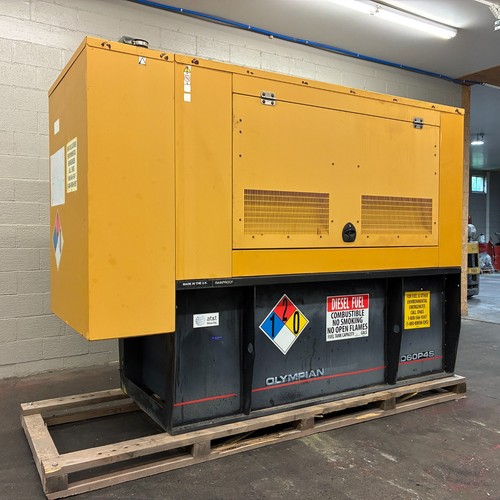
- CAT Olympian 60kW Diesel Standby Generator — industrial standby pick
- Baldor DG6E 6000W Diesel Portable Generator — most portable diesel choice
- Cummins 50kW Diesel Generator B3.9-G4 Enclosed — reliable Cummins workhorse
Diesel vs. Gasoline Generators: What Actually Matters in Real-World Use
Most buyers want to know: is a diesel generator actually worth it compared to a gasoline model? For home or light-duty backup under 5kW, gasoline generators are common, but in the 6kW–500kW range (the category of the products below), diesel is the industry standard. Here’s why:
- Fuel efficiency: Diesel engines typically deliver 20–35% better fuel economy than gasoline at comparable loads, especially at higher wattages. This means lower operating costs for long runtimes.
- Engine longevity: Diesel engines are built for heavy-duty use and often outlast gasoline models by thousands of hours. For example, a well-maintained diesel can run 15,000+ hours before major overhaul, while gasoline options may require rebuilds at 3,000–5,000 hours.
- Safety and storage: Diesel is less flammable than gasoline, and diesel fuel is more stable in long-term storage—crucial for backup and remote setups.
- Noise and emissions: Modern diesel generators are quieter than older models, but at smaller sizes, gasoline units may still run quieter. Emissions standards for diesel are stricter, so newer or “Tier 4 Final” diesels are cleaner than legacy units.
- Startup reliability: Diesel engines are less prone to vapor lock and perform better in cold weather with proper maintenance, while gasoline units can struggle if left unused for months.
All the products in this guide are diesel-powered because, in the 6kW+ class, diesel is the practical choice for reliability, longevity, and fuel logistics. For small, portable, short-runtime needs (think below 5kW), gasoline generators still have a niche—but that’s not the market these units serve.
Direct Comparison: Diesel Generators on the Market Now

Pictured: Generac SD050
| Product | Condition | Price | Best For | Max Output (kW) | Portability |
|---|---|---|---|---|---|
| Generac SD050 50kW Diesel Generator with Trailer |
Used | $ | Heavy-duty, high-capacity option | 50 | Trailer-mounted |
 CAT Olympian 60kW Diesel Standby Generator CAT Olympian 60kW Diesel Standby Generator |
Used | $$ | Industrial standby pick | 60 | Stationary |
 Baldor DG6E 6000W Diesel Portable Generator Baldor DG6E 6000W Diesel Portable Generator |
Used | $ | Most portable diesel choice | 6 | Portable (wheels/handles) |
 Cummins 50kW Diesel Generator B3.9-G4 Enclosed Cummins 50kW Diesel Generator B3.9-G4 Enclosed |
Used | $$$ | Reliable Cummins workhorse | 50 | Stationary |
 Generac SD500 500kW Diesel Generator Perkins 15.2L Generac SD500 500kW Diesel Generator Perkins 15.2L |
Used | $$$ | Highest capacity available | 500 | Stationary |
 Generac MMG25IF4 25kVA Mobile Diesel Generator Generac MMG25IF4 25kVA Mobile Diesel Generator |
Used | $$ | Mobile mid-size option | 20 | Trailer-mounted |
 Olympian G35F1S 35kW Diesel Generator Olympian G35F1S 35kW Diesel Generator |
New | $ | New mid-range diesel pick | 35 | Stationary |
Pricing key: $ marks the budget tier, $$ the mid-range, $$$ the premium picks. Tiers are relative to the products in this comparison; actual prices update live below.
How diesel generator models stack up in practice
The Baldor DG6E 6000W Diesel Portable Generator stands out as the only practical diesel option for users who need genuine portability. With its 6,000W (6kW) output and wheeled frame, you can move it between work sites or use it for smaller off-grid cabins. For anything larger, you’re looking at stationary or trailer-mounted units.
The Generac SD050 50kW Diesel Generator with Trailer and Generac MMG25IF4 25kVA Mobile Diesel Generator both offer mobile power at a much higher capacity. The SD050 brings 50kW and a trailer for easy towing, ideal for temporary event power, construction, or disaster response. The MMG25IF4, rated at 25kVA (about 20kW), fills the gap for users who want mobility but don’t need 50kW+.
If you need a permanent standby solution, the CAT Olympian 60kW Diesel Standby Generator and Cummins 50kW Diesel Generator B3.9-G4 Enclosed are both industrial-grade, stationary models. The CAT Olympian offers slightly more output (60kW vs. 50kW) and is positioned as a mid-priced, heavy-duty standby unit. The Cummins is a premium pick, known for reliability, and often chosen for mission-critical applications where up-time is non-negotiable.
The Generac SD500 500kW Diesel Generator Perkins 15.2L is in a league of its own for capacity. With a massive 500kW output, it’s designed for large facilities, commercial operations, or microgrid backup. This is overkill for residential or small business use, but indispensable if you need to power a whole campus or industrial process.
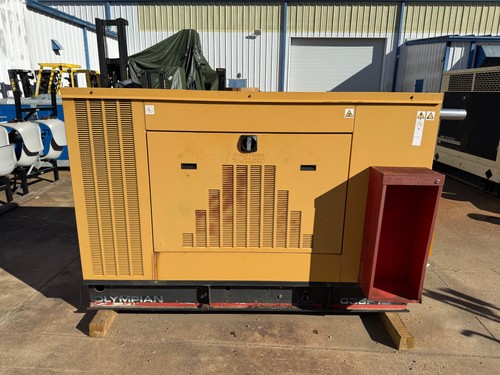
Finally, the Olympian G35F1S 35kW Diesel Generator is the only new, mid-range model on this list. For buyers who want a warranty and the peace of mind of a new unit, this is the standout—delivering 35kW, which covers most whole-home or small business needs, without the uncertainty that can come with used equipment.
Common mistakes to avoid
- Underestimating your load: Many buyers pick a generator that matches their average load, not the peak. This leads to tripping breakers or failing to start large motors. Always size for starting surges, not just running watts.
- Ignoring fuel storage logistics: Diesel is safer to store than gasoline but still requires planning for tank size, fuel rotation, and local regulations. Don’t assume any tank will do—check for legal and code requirements.
- Overlooking mobility needs: It’s easy to buy a stationary generator when you really need a trailer-mounted or portable unit. Moving a 2,000+ lb generator without wheels is a major headache.
- Assuming “used” means unreliable: Many used industrial diesel generators have thousands of hours left. But skip units without maintenance records or with visible leaks—those can be money pits.
- Skipping transfer switch planning: A generator is only useful if you can safely connect it to your loads. Failing to plan for a compatible and code-compliant transfer switch can delay installation and add surprise costs.
Who should choose each generator?
If you need to cart power around a jobsite or move it between properties, the Baldor DG6E is the only diesel option that’s genuinely portable. For users needing 20–50kW and mobility, trailer-mounted picks like the Generac SD050 and MMG25IF4 are the sweet spot. Permanent standby for a business, farm, or large home? The CAT Olympian 60kW and Cummins 50kW are the most robust choices, with the Cummins commanding a premium for its reliability. For the highest output, the Generac SD500 is purpose-built for industrial or campus-scale needs. If you want something new, under warranty, and mid-range, the Olympian G35F1S is the clear choice.
Gasoline units simply don’t exist in this capacity class for a reason: the operating costs, safety, and longevity just can’t compete with diesel at 6kW and above. If your needs are genuinely small (think camping or occasional tool use under 5kW), gasoline is an option—but that’s outside the scope of these models.
Related Guides
- Choosing the Best Solar Generator Kit for Home Backup Power
- String Inverter vs Hybrid Inverter: Which Is Right for Your Off-Grid Setup?
- Our guide to What Does a Solar Charge Controller Do? Key Functions Explained
- How to Choose the Best Battery Isolator Kit for Your Off-Grid Setup
- Our guide to Portable Solar Blankets That Are Actually Worth It
- Our guide to Portable Solar Blankets, Reviewed and Compared
- Browse all Off Grid Generators →
How we narrowed down this shortlist
We focused on diesel generators from 6kW to 500kW, as this is the practical range where diesel outperforms gasoline in fuel efficiency, longevity, and safety. Key criteria included output capacity (kW), portability (stationary, trailer, or handheld), condition (new vs. used), and market positioning (industrial, residential, portable). Only units with clearly stated wattage and intended use-case were considered. We compared the listed features, market reputation, and manufacturer specs to identify which models fit the most common real-world scenarios.
Excluded: gasoline generators, since none in this wattage class are practical for industrial or whole-home use; unbranded or generic units with no service support; and any listing lacking clear maintenance history or output specs. If you only need a small, temporary backup (under 5kW), or want a super-quiet, ultra-light generator for camping, these aren’t for you—look at inverter gasoline models instead.
For more on generator safety standards and fuel storage regulations, see the Occupational Safety and Health Administration (OSHA) for workplace use and U.S. Department of Energy for fuel handling guidelines.
FAQ: Diesel vs. Gasoline Generators for Off-Grid and Backup Power
How long will a diesel generator like the Generac SD050 run on a full tank?
Runtime depends on fuel tank size and load, but a 50kW diesel generator like the Generac SD050 typically runs 18–24 hours at half-load on a standard 100–150 gallon tank. Full-load runtimes are shorter; always check the specific tank and consumption rate for your model.
Is the Baldor DG6E a better choice than a gasoline portable for 6kW jobs?
For continuous or frequent use, the Baldor DG6E’s diesel engine offers better fuel efficiency and longevity than a gasoline portable of similar size. However, it’s heavier and noisier than most gas portables, so if you need ultra-lightweight or super-quiet operation, a gasoline model may still be preferable.
What’s the main advantage of choosing a new generator like the Olympian G35F1S over a used unit?
New units like the Olympian G35F1S come with a manufacturer warranty and zero run hours, reducing the risk of early repairs or unknown maintenance history. If uptime is critical or you have no time for surprises, new models offer peace of mind—though at a higher price than used alternatives.
Generac SD500 vs. CAT Olympian 60kW: Which is better for a small factory?
The Generac SD500 is dramatically oversized for most small factories—its 500kW output is suited for campus-scale needs. The CAT Olympian 60kW is a better match for small manufacturing or commercial applications, balancing capacity and efficiency without excessive fuel costs.
Can diesel generators like the Cummins 50kW be used for home backup?
Yes, models like the Cummins 50kW can provide whole-home backup, especially for large houses with central A/C, well pumps, or multiple appliances. Just be aware of the noise, space, and fuel storage requirements—these are industrial-grade units, not plug-and-play home products.
What should I check before buying a used diesel generator?
Inspect maintenance records, engine hours, and look for signs of leaks or corrosion. Confirm that the generator has been load-tested and that transfer switch compatibility matches your intended installation. Used units can be a great value, but only if they’ve been properly maintained and tested.
Last updated: July 2026 · Our research process