7 min read
Disclosure: As an Amazon Associate and eBay Partner Network publisher, we earn from qualifying purchases. This doesn’t affect what we recommend or how we describe it.
Most off-grid battery bank owners hear “balancing” and picture a complicated, technical process only for experts. In reality, the way you balance a battery bank—and whether you need to—depends on your battery type, bank size, and how you use your system. The right approach can double your battery life and prevent frustrating failures, but the wrong one wastes time or even harms your setup. Let’s clear up the confusion and show you exactly how to balance a battery bank—practically, safely, and cost-effectively.
What most buying guides get wrong about battery bank balancing
Many guides treat all battery banks the same, pushing you toward expensive balancers or complicated wiring regardless of your real needs. But there’s a world of difference between keeping four flooded lead-acid golf cart batteries in sync for a homestead and a compact 12V lithium setup in a van. The risks, tools, and payoffs vary with chemistry, bank size, and how deeply you cycle your batteries. Here’s what you actually need to know before you buy—or start balancing.
Comparing real-world battery bank balancing approaches
| Approach | Best For | Key Tool/Spec | Maintenance Needed | Pros & Cons |
|---|---|---|---|---|
| Manual Top Balancing | Flooded lead-acid, small banks | Equalize at 15.5V (12V bank) | Monthly | Simple, cheap; risk of overcharge if unsupervised |
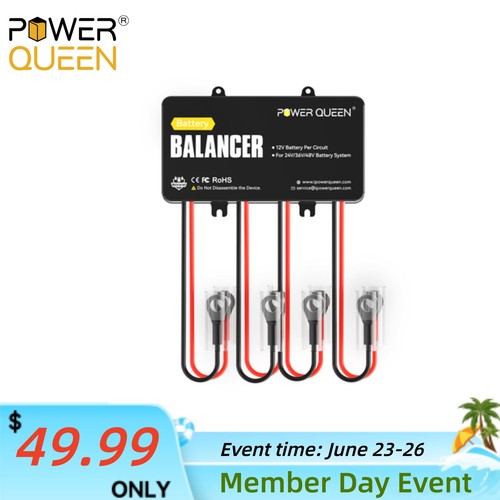
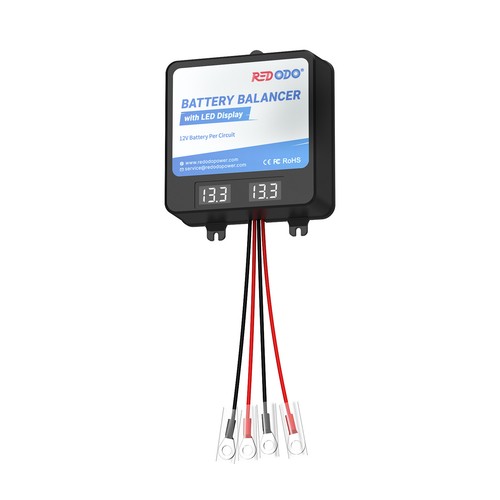
| Passive Balancer Module | LiFePO4, up to 8 cells | 1-2A shunt balancing | Installed once | Works automatically; limited to modest current, not for large imbalances |
| Active Balancer Module | Large lithium banks, 8+ cells | Up to 5A active transfer | Installed once | Fast, efficient; pricier and needs wiring skill |
| Integrated BMS with Balancing | Drop-in lithium batteries | Built-in, 50-100mA/cell | None | Hands-off; limited by low balance current, not ideal for mismatched cells |
Beginner’s pre-purchase checklist
- Count the number of cells or batteries in your planned bank—balancing needs multiply with more series connections.
- Check your battery chemistry—flooded, AGM, LiFePO4, and other lithium types have different balancing requirements.
- Measure your typical daily depth of discharge (e.g., do you use 20% or 80% of your battery’s capacity most days?).
- Look up your charger’s maximum equalization or balancing voltage—some chargers can’t safely balance all chemistries.
- Confirm that your inverter and charge controller support the voltage range needed for balancing cycles.
- Read your battery manufacturer’s warranty terms—some require periodic balancing or void coverage if cells get out of sync.
- Decide if you want a hands-off system (integrated BMS) or are comfortable with periodic manual checks and adjustments.
The spec almost nobody talks about: balance current
Most beginners focus on battery capacity and voltage, but the balance current—how quickly a balancer can move charge between cells—makes a big difference in real-world results. For example, a passive balancer that shunts only 60mA per cell might take days to correct a big imbalance, while an active balancer moving 3A per cell can fix it in a few hours. If you regularly run your bank hard, or if you’re mixing old and new batteries, higher balance current is worth the investment. Check this spec before you buy (it’s often buried in the manual).
Compare optionsHow to balance a battery bank: step-by-step
- Identify your battery chemistry and configuration.
Flooded lead-acid, AGM, and lithium banks each have unique balancing needs and safe voltage ranges. Write down your bank’s voltage (e.g., 12V, 24V) and number of series-connected cells. - Choose the right balancing method.
For lead-acid, you’ll likely use a controlled equalization charge. For lithium, select a passive or active balancer, or verify your battery’s BMS handles balancing internally. - Prepare your setup for balancing.
For manual balancing, disconnect loads and set your charger to the manufacturer’s recommended equalization or top-balance voltage (e.g., 15.5V for 12V lead-acid, 3.65V per cell for LiFePO4). For balancer modules, ensure wiring is correct and connections are tight. - Initiate the balancing or equalization cycle.
Start the process and monitor voltage and temperature. For lead-acid, stop once all cells reach gassing voltage and specific gravity readings stabilize. For lithium, watch for cell voltages to converge within 0.01V (10mV). - Verify results and return to normal operation.
Check that all cells or batteries are closely matched (within manufacturer’s spec—often 0.05V or less for lithium, 0.1V for lead-acid). Reconnect loads and reset charger to normal charging mode.
When balancing is critical—and when you can skip it
Not every battery bank needs regular balancing. Flooded lead-acid banks with three or more batteries in series, or lithium setups built from loose cells, must be balanced periodically. But many sealed AGM and drop-in lithium batteries with built-in BMS handle small imbalances on their own. If your bank is made of identical, new, high-quality batteries, and you don’t deeply discharge them, balancing might only be needed annually—or not at all. However, if you notice uneven voltage, rapid capacity loss, or one battery always charging/discharging faster than others, it’s time to balance before permanent damage occurs.
See today’s dealsFAQs: real-world battery bank balancing questions
How often should I balance a lead-acid battery bank?
For off-grid systems with flooded lead-acid batteries, plan to equalize (top balance) every 30-60 days, or whenever you see a 0.1V or greater difference between series-connected batteries after a full charge. AGM and gel batteries rarely need balancing if charged properly.
Is balancing necessary for new lithium batteries?
Most drop-in lithium batteries with integrated BMS arrive pre-balanced and don’t need manual balancing. However, DIY LiFePO4 banks built from individual cells should be top-balanced before first use and checked every few months, especially if deeply cycled.
Manual equalization vs. passive balancer: which is better for solar setups?
Manual equalization works well for lead-acid banks under solar, as it can correct stratification and imbalances with a high-voltage charge. For lithium banks, a passive or active balancer is safer and more reliable, since lithium can be damaged by overvoltage. Choose the method that matches your battery chemistry and usage pattern.
What’s the risk if I skip balancing for six months?
Imbalanced cells or batteries can lead to reduced usable capacity, faster aging, and even failure. For lead-acid, sulfation and stratification can set in. For lithium, one cell may hit low or high voltage cutoff, causing the whole bank to shut down unexpectedly. Regular checks prevent expensive surprises.
How long does a balancing cycle take for a 4-cell LiFePO4 bank?
With a passive balancer rated at 1A, correcting a 0.2Ah imbalance could take about 12 minutes (0.2Ah ÷ 1A = 0.2 hours), but most real-world imbalances are smaller. However, some built-in BMS balancers are limited to 50-100mA, taking several hours or longer for the same job.
Can I mix old and new batteries in the same bank if I balance them?
Mixing old and new batteries—even if balanced—usually leads to poor performance and shortens bank life. The weaker battery limits the whole bank. If you must mix, use batteries of the same age, capacity, and chemistry, and monitor voltage closely. Consider replacing all at once for best results.
Do balancing modules affect my battery warranty?
Some manufacturers require or recommend balancing for warranty coverage, especially for lithium cells. Using a reputable balancer or following the manufacturer’s procedure typically keeps your warranty valid. However, bypassing or modifying built-in BMS systems can void coverage—always check your documentation before making changes.
Related Guides
- Choosing the Best Deep Cycle Battery for Off-Grid Power
- The Best Battery Monitors, Reviewed for Reliable Off-Grid Power
- Our guide to Portable Battery Boxes for Off-Grid Power
- The Best Solar Battery Maintainers for Reliable Off-Grid Power
- Power Station vs Deep Cycle Battery: Which Off-Grid Power Option Wins?
- Our guide to Battery Disconnect Switches That Are Actually Worth Using
- Browse all Deep Cycle Batteries →
Further reading from trusted sources
For a deep dive into battery balancing science and standards, see the technical resources at SAE International, which sets many of the industry’s battery guidelines. For practical, hands-on battery care tips, check out the educational materials at the National Renewable Energy Laboratory.

Last updated: July 2026 · How we cover this topic