8 min read
Disclosure: As an Amazon Associate and eBay Partner Network publisher, we earn from qualifying purchases. This doesn’t affect what we recommend or how we describe it.
Curved roofs present a unique challenge for solar panel installation, often increasing project costs by 20–40% compared to flat or standard-pitch roofs. The curve complicates both mounting and panel selection, but with the right approach, you can still gain reliable off-grid power. Knowing which solar panel types and mounting options actually fit — and which will cost you time and money — is critical for getting a system that works safely and efficiently.
Comparing the main options for solar on curved roofs
| Configuration | Panel Type | Mounting Method | Typical Output (W/panel) | Curve Compatibility |
|---|---|---|---|---|
| Flexible Panels, Direct Bond | Monocrystalline Flexible | Adhesive or VHB Tape | 100–180W | Excellent (up to 30°) |
| Rigid Panels, Custom Rails | Standard Glass Rigid | Curved Aluminum Rails | 200–400W | Moderate (gentle curves only) |
| Frameless Semi-Flex, Clamp Mount | Semi-Flexible ETFE | Edge Clamps & Backing | 120–170W | Good (up to 20°) |
| Custom BIPV Sheets | Thin-Film Integrated | Roof-Integrated | 50–100W/m² | Excellent (full conformity) |
Flexible solar panels are usually the best fit for curved roofs
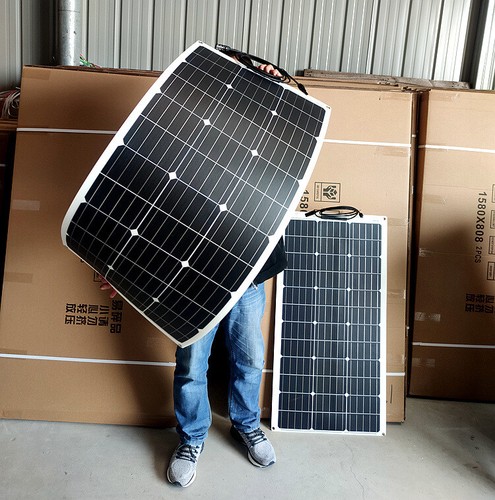
Flexible monocrystalline panels, especially those with ETFE (ethylene tetrafluoroethylene) surfaces, can bend to match the roof’s contour, making them the go-to for domes, barrels, and RVs. Most flexible panels can safely flex up to 30 degrees, covering the curve of most van roofs and many residential outbuildings. They’re lightweight (typically under 5kg for a 150W panel), which minimizes structural stress and simplifies installation. The trade-off: their efficiency is usually 2–5% lower than top rigid panels, and they run hotter due to direct roof contact, which can shave another 2–3% off output in hot climates.
For barrels and domes with a tight radius, avoid anything labeled “semi-flexible” with a bend rating under 20°. These are likely to crack or delaminate if forced to conform. ETFE-coated models last longer than PET-coated ones; look for a UV resistance rating and at least a 3-year materials warranty. See today’s deals
Rigid panels can work, but only on gentle curves
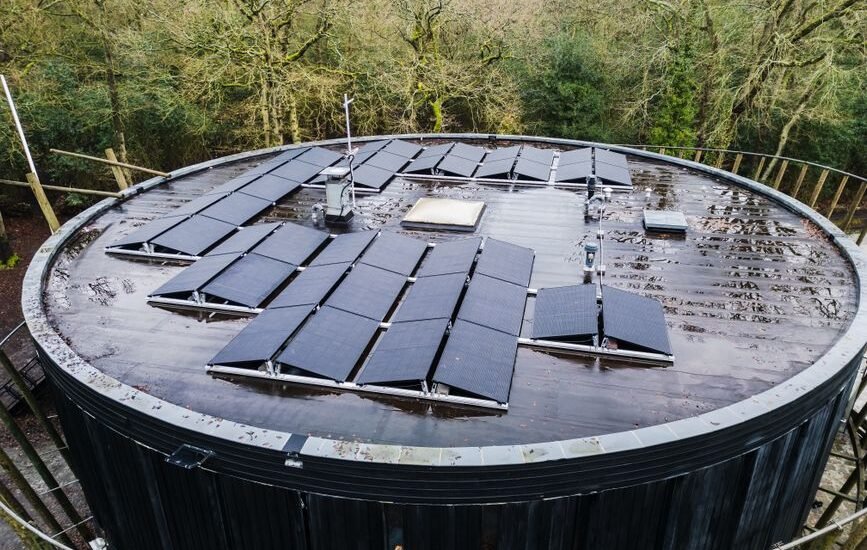
Standard aluminum-framed glass panels are still the king for price-per-watt and durability. But on a curved roof, they require a custom racking solution. Curved aluminum rails or “Z” brackets can span a gentle curve (typically 5–15° arc), but anything tighter risks panel stress fractures. Expect higher labor costs for mounting, and be aware that rigid panels will sit above the roofline, increasing wind resistance and the chance of leaks if not properly flashed. For off-grid cabins or workshops with a curved metal roof, this method is viable — but measure your arc and check the manufacturer’s max allowable flex before buying.
For most DIYers, the complexity and cost of custom rails makes this option less attractive unless you need panels over 200W each or live in a snow-prone region where rigid panels’ strength pays off. Compare options
Red flags in listings to walk past
- No stated bend radius or flex angle: If a panel’s listing doesn’t specify a maximum bend (e.g., “up to 30°”), the seller likely hasn’t tested it — a common sign of rebranded generic panels.
- Only PET surface material: PET (polyethylene terephthalate) coatings degrade quickly in sun and weather, often turning yellow or cracking within two years. Look for ETFE or TPT instead.
- No warranty or less than 12 months: Panels without at least a 1-year warranty are rarely worth the risk, especially for roof mounting where removal is costly.
- Missing dimensions or weight: Listings that only show wattage but skip panel size usually don’t know the actual product specs — a red flag for fit and quality.
- “Universal fit” claims without hardware details: Flexible panels need specific adhesives or mounting kits. If a listing is vague about what’s included, expect to chase down parts later.
How to install solar panels on a curved roof: step-by-step guide
- Measure the roof curve accurately. Use a flexible tape or contour gauge to capture the curve’s radius and total usable surface area. This ensures you pick panels with a matching bend tolerance and avoid wasted purchases.
- Choose panels rated for your curve. Select flexible or semi-flexible panels with a specified maximum bend angle that exceeds your roof’s curve, and check dimensions to maximize surface use without overlap.
- Plan your mounting layout and wiring runs. Dry-fit the panels and mark wire entry points. On domes and tight curves, stagger the panels to avoid excessive stress and ensure each panel lays flat across its width.
- Clean and prep the roof surface. Remove dirt, oil, and wax so adhesives will bond. For metal roofs, lightly scuff the area with fine sandpaper for better grip.
- Mount panels with adhesive or tape. Use only adhesives rated for both the panel’s backsheet and your roof material (e.g., VHB tape, MS polymer adhesive). Press panels firmly to conform to the curve, and support with soft weights until cured.
- Seal wire entry points and check all connections. Use UV-stable sealant at every roof penetration. Connect panels to the charge controller as per manufacturer instructions, and test system output before finalizing cable runs.
Key buying decisions: panel sizing and output for curved roofs
Curved roofs limit the size and number of panels you can mount, so maximizing output per square foot is crucial. Flexible panels typically come in 100W, 120W, and 150W sizes, with widths from 50–70 cm and lengths up to 1.5 meters. Measure your roof’s usable area and calculate the total wattage you can realistically fit. On a typical van or barrel roof (3m x 2m curved area), you can usually fit 2–4 flexible panels for 200–600W total output.
Factor in shading from nearby trees, vents, or roof features. Even partial shading can cut output by 50% or more if panels are wired in series. For most off-grid setups, aim to oversize your array by 10–20% above your calculated daily power needs to compensate for real-world losses. View what’s available
Related Guides
- How to Install Solar Panels on a Curved Roof: A Step-by-Step Guide
- Portable Solar Panels for Camping, Reviewed
- Our guide to What Is the Ideal Tilt Angle for Solar Panels?
- Our guide to How to Tilt Solar Panels for Maximum Sunlight: A Practical Guide
- How to Wire Multiple Solar Panels: A Step-by-Step Guide
- 12V Solar Charge Controller Circuit Diagram Explained
Do you need a custom mounting kit or can you DIY?
For most flexible panel installs on a curved roof, adhesive mounting is the standard. Use only adhesives or tapes rated for outdoor/UV use and compatible with both your panel’s backsheet and the roof material. Avoid generic construction adhesives, as they can fail under heat and UV. Custom mounting kits are needed if you plan to install rigid panels or if your roof has pronounced features (ridges, seams, skylights) that require standoff mounting. For domes or complex geometry, expect to cut custom aluminum or stainless brackets.
Some specialty semi-flexible panels come with integrated mounting grommets or edge clamps. These are handy for temporary or easily removable installs, but double-check that the clamps won’t stress the panel at the curve. Always follow the panel manufacturer’s max bend spec — exceeding it voids the warranty and risks early failure.
FAQs about installing solar panels on a curved roof
How much power can I realistically expect from flexible panels on a curved roof?
On a typical curved van or outbuilding roof, expect 200–600W of flexible panels, translating to 600–1,800 watt-hours per day in full sun. Actual output depends on your latitude, shading, and season. Heat buildup under the panels can reduce output by 5–10% compared to raised rigid panels.
Flexible vs rigid panels — which works better for most curved roofs?
Flexible panels are almost always easier and safer to install on tight curves (up to 30° bend), while rigid panels only work on gentle arcs and require custom rails. Rigid panels are more durable and efficient, but the added weight and mounting complexity usually aren’t worth it unless you need maximum output or live in a snow zone.
Can I mix flexible and rigid panels on the same roof?
Yes, but only if your charge controller supports multiple input types or you wire them with matching voltage/current specs. Mixing panel types can make wiring more complex and may affect shading performance. It’s usually simpler (and safer) to stick to one type per curved surface.
How long do flexible panels last on a curved roof?
Quality ETFE flexible panels typically last 5–10 years on a curved roof if installed with UV-stable adhesive and not flexed beyond their rated limit. PET-backed panels often degrade in 2–4 years, especially in hot or sunny climates. Always check the warranty terms for roof-mount use.
What should I do if my curved roof has roof vents or skylights?
Plan your panel layout to avoid shading and allow at least 5–10 cm clearance from any raised features. Flexible panels can often be cut to fit around obstacles, but only if the manufacturer allows it — trimming most panels voids the warranty and risks water ingress at the cut edge.
What are the most common installation mistakes on curved roofs?
Top mistakes include exceeding the panel’s bend rating (causing cracks), poor roof prep (leading to adhesive failure), and not sealing cable entry points (risking leaks). Always check that your chosen panel’s specs and mounting method are rated for your specific roof curve and material.
Where to find reliable technical guidance and standards
For more on solar panel performance and mounting standards, check out the Solar Energy Industries Association for best practices and the latest research on panel durability. Their resources help clarify what’s safe and effective for non-standard roofs. For roof material compatibility and safe solar retrofits, the National Roofing Contractors Association offers guidelines on working with curved and specialty roofs.


Last updated: July 2026 · About our research