8 min read
Disclosure: As an Amazon Associate and eBay Partner Network publisher, we earn from qualifying purchases. This doesn’t affect what we recommend or how we describe it.
Choosing the right lithium battery for your RV isn’t just about picking the biggest number on the box. The real decision is about matching your power needs, monitoring preferences, and budget to the right battery. Some batteries give you Bluetooth control and extra features for a fair price; others double down on raw capacity for long off-grid stays. This guide breaks down the key differences between five top-rated lithium RV batteries, including Bluetooth-enabled models, compact options for smaller rigs, and heavy-duty picks for large power draws. For more detail, see RV Industry Association and resources.
Top picks at a glance
- Power Queen 12V 125Ah Group 27 Bluetooth LiFePO4 Lithium Battery — the best balance of capacity, features, and price for most RV users
- DC HOUSE 12V 100Ah LiFePO4 Lithium Battery with Bluetooth and LED Indicator — the best option with Bluetooth monitoring at a mid-range price
- ECO-WORTHY 12V 280Ah 3584Wh Bluetooth LiFePO4 Lithium Battery — the high-capacity pick for extended off-grid stays
- ECOLITE 12V 300Ah Lithium Battery — the premium, heavy-duty choice for large RV power needs
Side-by-Side Comparison of Top Lithium RV Batteries
| Product | Condition | Price | Best For | Capacity (Ah) | Special Features |
|---|---|---|---|---|---|
| Power Queen 12V 125Ah Group 27 Bluetooth LiFePO4 Lithium Battery | New | $$ | Most RV users | 125 | Bluetooth monitoring |
| DC HOUSE 12V 100Ah LiFePO4 Lithium Battery with Bluetooth and LED Indicator | New | $ | Budget Bluetooth | 100 | Bluetooth, LED status |
| ECO-WORTHY 12V 280Ah 3584Wh Bluetooth LiFePO4 Lithium Battery | New | $$ | Extended off-grid stays | 280 | Bluetooth, high capacity |
| ECOLITE 12V 300Ah Lithium Battery | New | $$$ | Large RVs, premium heavy-duty | 300 | Heavy-duty, high capacity |
| 12V 60Ah LiFePO4 Lithium Battery | New | $ | Compact/small RVs | 60 | Lightweight, compact |
Price: $ = budget, $$ = mid-range, $$$ = premium — relative to the options compared above. Live prices and current stock are below. For more detail, see Lithium-ion battery overview.
How to Match a Lithium RV Battery to Your Real Needs
The right battery depends on how you use your RV. Do you need just enough to run lights and a fan overnight, or are you powering an inverter, fridge, and CPAP for days off-grid? Here’s how the top choices stack up for real-world RV use.
Best All-Around: Power Queen 12V 125Ah Group 27 Bluetooth LiFePO4 Lithium Battery
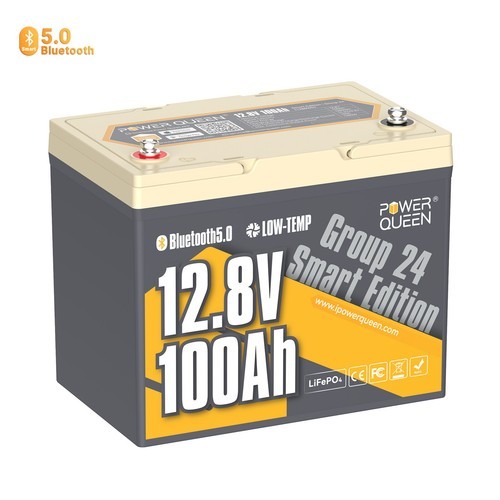
The Power Queen 12V 125Ah Group 27 Bluetooth LiFePO4 Lithium Battery stands out for its balance of usable capacity, Bluetooth monitoring, and mid-range price. At 125Ah, it covers the daily energy needs of most RVers running DC loads, moderate inverter use, and even portable fridges. Bluetooth lets you monitor state of charge and battery health from your phone—no guessing or digging for a voltmeter. Group 27 sizing means it’s a drop-in for many RV battery compartments. Unless you need extreme capacity or are pinching every dollar, this is the sweet spot for most.
Budget Bluetooth Pick: DC HOUSE 12V 100Ah LiFePO4 Lithium Battery with Bluetooth and LED Indicator
If you want Bluetooth monitoring but don’t need to run big appliances, the DC HOUSE 12V 100Ah LiFePO4 Lithium Battery with Bluetooth and LED Indicator is the most affordable way to get it. 100Ah is enough for smaller RVs or weekenders running lights, fans, and CPAPs, or for those who only use the inverter for short bursts. The LED indicator gives you a quick visual check of charge status—a rare feature in this price bracket. You get a modern lithium battery with app-based monitoring, without the premium price tag.
High-Capacity for Extended Stays: ECO-WORTHY 12V 280Ah 3584Wh Bluetooth LiFePO4 Lithium Battery
For RVers who boondock for days or weeks, the ECO-WORTHY 12V 280Ah 3584Wh Bluetooth LiFePO4 Lithium Battery provides more than double the usable energy of most standard batteries. 280Ah means you can run a 12V fridge, lights, fans, and even occasional inverter loads for several days without recharging. Bluetooth integration helps you track deep discharges and plan solar recharges. At a mid-range price for this capacity, it’s a practical solution for serious off-grid use—just make sure your RV’s battery compartment can fit the extra size and weight.
Premium Heavy-Duty: ECOLITE 12V 300Ah Lithium Battery
When you need maximum storage and don’t want to compromise on quality, the ECOLITE 12V 300Ah Lithium Battery is the premium choice. With 300Ah of capacity, it’s aimed at large RVs, high inverter loads, or full-time off-grid setups running multiple high-draw appliances. This battery is positioned for those who want heavy-duty performance and are willing to pay for the extra headroom and durability. If you have a large solar array or run air conditioning, this is the tier you should be shopping in.
Compact and Affordable: 12V 60Ah LiFePO4 Lithium Battery
For minimalists, teardrop trailers, or anyone with tight space and modest needs, the 12V 60Ah LiFePO4 Lithium Battery is the most compact and budget-friendly option in this lineup. 60Ah is enough for basic lighting, charging phones, and running a fan overnight. It’s also a smart pick for secondary battery banks, or as a starter battery if you plan to expand later. The smaller footprint fits in places that standard Group 27 or Group 31 batteries can’t go.
Related Guides
- How to Choose the Right Solar Charge Controller for Lithium Batteries
- Amp Hours vs Watt Hours: What’s the Real Difference?
- Our guide to Portable Power Stations for Camping: Which Ones Are Worth It?
- Our guide to Portable Generators vs Inverter Generators: What’s the Real Difference?
- Understanding 12V Solar Charge Controller Circuit Diagrams: What Matters Most
- Browse all Deep Cycle Batteries →
What Makes These Lithium Batteries Different?
All five batteries use LiFePO4 chemistry, which is safer and longer-lasting than traditional lead-acid or older lithium-ion designs. The real-world differences come down to capacity, monitoring features, and the value you get per amp-hour.
- Bluetooth Monitoring: Both the Power Queen and DC HOUSE batteries offer Bluetooth, but the DC HOUSE adds an LED status indicator—a handy touch for quick visual checks.
- Capacity Range: Options run from 60Ah (for minimalist setups) up to 300Ah (for large RVs and heavy power draws). The sweet spot for most RVers falls between 100–125Ah.
- Heavy-Duty Builds: The ECOLITE and ECO-WORTHY models are designed for higher daily cycles and larger loads. If you use an inverter for hours each day, these higher-capacity models give you the buffer you need.
- Physical Size: Group 27 sizing on the Power Queen makes it a direct fit for many RV battery trays. The 60Ah model is the lightest and easiest to handle, while the 280–300Ah batteries are physically larger and heavier—important if you’re tight on space or weight capacity.
How to Size Your Lithium Battery Bank for RV Use
Before you pick a battery, estimate your daily amp-hour needs. Add up the current draw (in amps) of your main devices and multiply by the hours you use them. For example, a 12V fridge drawing 4A for 24 hours uses 96Ah per day. Add lighting, fans, and charging needs, then pick a battery with at least 20% more capacity than your calculation to avoid deep cycling and to account for inverter losses. If you routinely camp off-grid for multiple days, consider the 280–300Ah models; for weekenders or plug-in users, 60–125Ah is usually enough.
Bluetooth Monitoring: Is It Worth It?
Bluetooth monitoring lets you check state of charge, voltage, temperature, and cycle count from your phone—no more guessing or removing battery covers. It’s especially useful for lithium batteries, since voltage alone isn’t a reliable indicator of state of charge with LiFePO4 chemistry. If you like to keep tabs on your system or want early warning of issues, a Bluetooth-enabled battery like the Power Queen or DC HOUSE is worth the small price bump. For those who prefer simplicity and don’t mind checking status with a voltmeter, the ECOLITE and 60Ah models skip Bluetooth but offer solid performance per dollar.
Real-World Tips for Choosing and Using Lithium RV Batteries
- Match the battery to your charging system. Most modern RV chargers and solar controllers are compatible with LiFePO4, but double-check for adjustable voltage setpoints. Batteries with built-in Bluetooth make it easier to monitor charging progress.
- Plan for expansion. If you think you’ll need more capacity later, start with a battery that can be paralleled with others (check the manufacturer’s specs for parallel support).
- Check dimensions and weight. Larger capacity batteries are heavier and may require reinforcing your battery compartment or upgrading tie-downs.
- Prioritize features that match your use. For boondockers, high capacity and Bluetooth are worth the investment. For plug-in campers, a budget 60–100Ah battery is often more than enough.
FAQs About Lithium Batteries for RVs
Are all LiFePO4 batteries safe for RV use?
LiFePO4 chemistry is inherently safer than older lithium-ion designs, with built-in protection against thermal runaway. All the batteries listed here are marketed for RV or off-grid use, but you should always install them according to manufacturer guidelines and avoid exceeding their rated charge/discharge specs.
How long will a 100Ah lithium battery last in my RV?
With typical RV use (LED lights, water pump, phone charging), a 100Ah battery can last 1–2 days off-grid. Running an inverter or fridge will reduce that time. LiFePO4 batteries can be discharged up to 80–90% of their rated capacity, unlike lead-acid which should only be discharged to 50%.
Can I mix different lithium batteries in my RV?
It’s not recommended to mix batteries of different brands, capacities, or ages in the same bank. For best performance and safety, use identical batteries from the same manufacturer and production batch if possible. Mixing can lead to uneven charging and reduced lifespan.
Do I need a special charger for lithium RV batteries?
Many modern RV converters and solar charge controllers have a lithium or LiFePO4 setting. If yours does not, look for a charger with a maximum charge voltage of 14.2–14.6V and no equalization stage. Using the wrong charger can reduce battery life or disable safety protections.
Is Bluetooth monitoring necessary for lithium RV batteries?
Bluetooth isn’t strictly necessary, but it does make it much easier to monitor state of charge and battery health. Without it, you’ll need to rely on a voltmeter or install a separate battery monitor. For those who want to avoid surprises or troubleshoot issues remotely, Bluetooth is a worthwhile upgrade.
How do I estimate the right capacity for my RV?
Add up the amp-hours used by your devices in a 24-hour period, then add 20–30% extra for safety and inverter losses. For weekenders, 60–125Ah is usually enough. Full-timers or heavy inverter users should consider 200Ah or more, especially if camping off-grid for multiple days without recharging.
- See more lithium RV batteries on Amazon
Last updated: May 2026 · About our research