8 min read
Disclosure: As an Amazon Associate and eBay Partner Network publisher, we earn from qualifying purchases. This doesn’t affect what we recommend or how we describe it.
Top picks at a glance
- 12V 30A DC to DC Battery Charger 375W — the most compact and affordable DC-DC charger option
- DC to DC Battery Charger 40A 520W — a higher-capacity DC-DC charger for larger RV battery banks
- DC to DC Charger with MPPT 650W — the most feature-rich option with integrated MPPT solar charging
- Waterproof DC to DC Battery Charger 30A 438W — the best choice for wet or harsh environments
Choosing the right DC to DC charger for your RV isn’t just about matching amperage—it’s about balancing battery size, charging speed, space, and the specific conditions your rig faces on the road. The four products compared here each fill a distinct role, from ultra-compact budget units to feature-rich chargers with integrated solar. This guide breaks down the real differences so you can avoid overpaying for features you won’t use—or ending up with a charger that can’t keep up with your battery bank. For more detail, see Comprehensive guide to off-grid power systems.
RV DC to DC Charger Comparison Table
| Product | Condition | Price | Best For | Max Output (A/W) | Special Features |
|---|---|---|---|---|---|
| 12V 30A DC to DC Battery Charger 375W | New | $ | Compact, affordable RV setups | 30A / 375W | Smallest footprint |
| DC to DC Battery Charger 40A 520W | New | $ | Larger battery banks on a budget | 40A / 520W | High output for price |
| DC to DC Charger with MPPT 650W | New | $$ | RV solar integration & feature-rich | Varies / 650W | Integrated MPPT solar |
| Waterproof DC to DC Battery Charger 30A 438W | New | $$$ | Wet/harsh environments | 30A / 438W | Waterproof, ruggedized |
Note on pricing: the $ symbols are relative tiers within this comparison — $ is the cheapest of the bunch, $$$ the priciest. Live listings (and exact prices) appear further on.
Which DC to DC Charger Matches Your RV Power Needs?
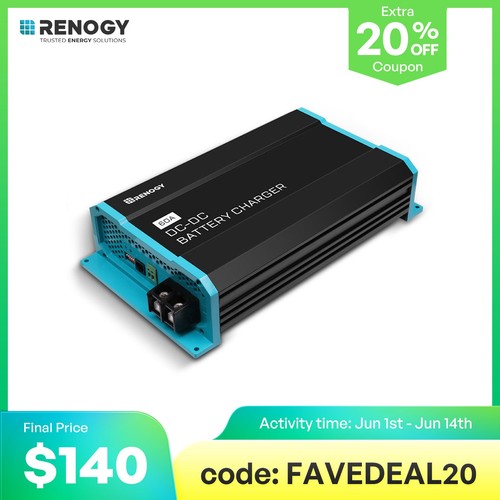
Start by sizing your charger to your battery bank and alternator. If your RV runs a modest 100–200Ah battery and space is tight, the 12V 30A DC to DC Battery Charger 375W is the smallest and least expensive option. This unit’s 30A output is enough to keep a typical off-grid RV topped up after a day’s drive, provided you aren’t running a huge inverter or lithium bank. At under 400W, it’s also less demanding on your alternator, so it’s a safe bet for most stock engines.
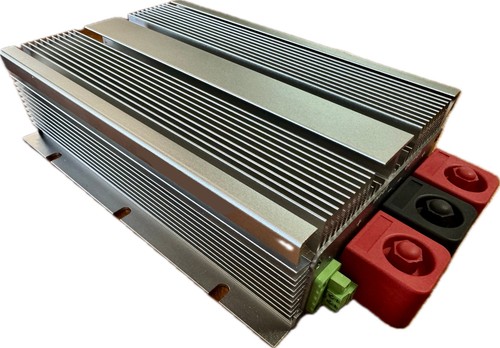
If you’ve upgraded to a larger battery bank (say, 200–400Ah, especially lithium), you’ll need higher charge rates to avoid painfully slow recovery times. The DC to DC Battery Charger 40A 520W bumps output to 40A and 520W, which is a practical ceiling for most alternators under real-world use. This is the strongest performer in the budget tier for fast charging, but still skips higher-end features like solar integration or weatherproofing.
For RVers who want to combine alternator and solar charging in one unit, the DC to DC Charger with MPPT 650W stands out. This charger’s built-in MPPT controller means you can wire solar panels directly to the same unit, with up to 650W total charging power. This simplifies wiring and control—especially valuable if you’re tight on cabinet space or want to streamline your system. If you plan to expand your solar array or want maximum flexibility, this is the most capable all-in-one solution on the list.
For marine rigs, overland builds, or anyone facing regular exposure to rain, mud, or road salt, the Waterproof DC to DC Battery Charger 30A 438W is the only unit here rated for harsh environments. Its ruggedized, sealed design resists water ingress and corrosion, making it the clear pick if you can’t fully protect your charger inside the RV. At 30A/438W, it matches the output of the entry-level unit but justifies its premium price with weatherproofing you can’t get from standard models.
Key Factors to Consider When Choosing an RV DC to DC Charger
Beyond price and output, look closely at charger features that truly matter for your setup:
- Charge Current: Match the charger’s amperage (30A, 40A, etc.) to your battery bank size. For AGM/lead-acid, keep charge rates at or below 0.2C (20% of battery Ah rating). For lithium, up to 0.5C is typical if your wiring and BMS allow. For example, a 200Ah lithium bank is ideally paired with a 30–40A charger.
- Alternator Compatibility: Make sure your alternator can safely supply the charger’s rated output plus vehicle loads. Most stock alternators handle up to 40A extra, but always check your vehicle’s specs.
- Integrated MPPT: If you want to combine alternator and solar charging, the DC to DC Charger with MPPT 650W is the only option here with a built-in solar controller, saving space and simplifying installation.
- Weatherproofing: Only the Waterproof DC to DC Battery Charger 30A 438W is sealed for wet or harsh environments. For all others, plan to install inside a dry, protected compartment.
- Physical Size: The 12V 30A DC to DC Battery Charger 375W is the most compact. For tight van or small RV installs, this could be the deciding factor.
How Each Charger Fits Real-World RV Scenarios
Each charger on this list is best suited to a different RV use case. Here’s how the specs translate to actual setups:
- Lightweight Campers & Modest Setups: The compact 30A, 375W model fits under seats or in small cabinets, and is overkill for most weekenders. It’s ideal if you have a 100–200Ah battery and modest inverter loads.
- Full-Time or High-Demand RVs: If you’re running a 200–400Ah lithium bank and want faster charging after overnight stays or boondocking, the 40A, 520W unit is the sweet spot for value and speed.
- Solar-Heavy Installations: If you want to minimize gear count, the 650W charger with MPPT lets you handle alternator and solar charging in one, supporting larger solar arrays (up to around 500–600W for practical RV roof space) with true MPPT efficiency.
- Outdoor & Marine Builds: For rigs exposed to spray, rain, or mud, only the waterproof 30A, 438W charger is designed to keep working when others would fail. This is the trade-off for maximum reliability in harsh conditions.
FAQ: DC to DC Chargers for RVs
Do I need a DC to DC charger if my RV already has a solar charge controller?
Yes, if you want to charge your house batteries from your vehicle’s alternator while driving. Solar charge controllers only handle solar input. DC to DC chargers ensure proper charging profiles and battery protection when charging from the alternator, which is critical for lithium batteries and long alternator life.
Can I use a DC to DC charger with lithium batteries?
All the chargers listed here are compatible with lithium batteries, as long as you select the correct charging profile. Always check that the charger supports lithium iron phosphate (LiFePO4) or your specific chemistry before installation.
How much charging current is safe for my RV batteries?
For AGM or lead-acid batteries, keep charging current at or below 0.2C (20% of battery capacity in Ah). For lithium, up to 0.5C is usually safe if your BMS and wiring are rated for it. For example, a 200Ah lithium battery can accept 40–100A, but 30–40A is a common, safe choice for most RVs.
Is a waterproof DC to DC charger necessary for my RV?
Only if you need to mount the charger in a location exposed to water, spray, or condensation—such as underbody compartments, exterior boxes, or marine applications. For most RVs, a standard charger installed inside a dry, protected area is sufficient and more cost-effective.
What is MPPT, and why would I want it in a DC to DC charger?
MPPT (Maximum Power Point Tracking) is a technology that optimizes solar panel output for maximum efficiency. A DC to DC charger with integrated MPPT, like the 650W model here, lets you combine alternator and solar charging in one device, simplifying your system and maximizing charge rates from solar.
Can I use a higher-amp DC to DC charger than my alternator can supply?
It’s not recommended. The charger will try to draw its rated current, which can overwork or damage your alternator. Always match the charger’s maximum input to your alternator’s continuous output rating, factoring in other vehicle loads. If in doubt, go with a lower-amp model or consult your vehicle’s alternator specs.
What’s the main advantage of a compact DC to DC charger?
Compact chargers are easier to fit in tight spaces, such as under seats or in small cabinets, and are generally more affordable. The trade-off is lower maximum output and fewer advanced features, but for smaller battery banks or minimalist van builds, this is often all you need.
How do I know if my RV alternator is compatible with these chargers?
Check your vehicle’s alternator output rating and ensure it can handle the combined load of your DC to DC charger plus all other vehicle electrical loads. Most modern alternators can safely supply an extra 30–40A, but always verify your specific model to avoid overloading.
Last updated: May 2026 · About our research
Related Guides
- Our guide to Amp Hours vs Watt Hours: What’s the Real Difference?
- Our guide to Portable Power Stations for Camping: Which Ones Are Worth It?
- Our guide to Portable Generators vs Inverter Generators: What’s the Real Difference?
- Our guide to Understanding 12V Solar Charge Controller Circuit Diagrams: What Matters Most
- Choosing the Best Solar Generator Kit for Home Backup Power
- Browse all Charge Controllers →
- Choosing the Right Lithium Battery Heater: What Actually Works