Disclosure: As an Amazon Associate and eBay Partner Network publisher, we earn from qualifying purchases. This doesn’t affect what we recommend or how we describe it.
6 min read
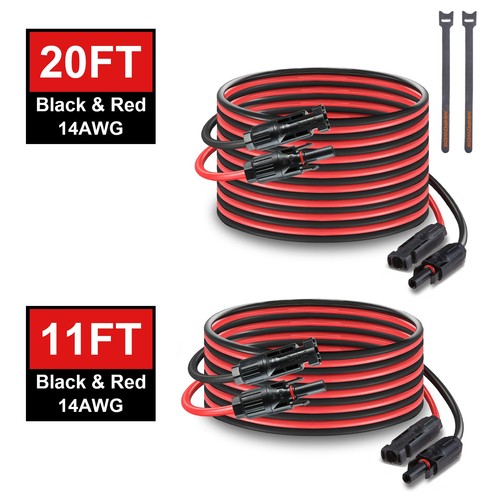
Running solar panels a few feet farther from your RV, van, or off-grid cabin can make all the difference—letting you park in the shade while your panels soak up sun, or simply reach that perfect patch of sunlight on your property. The right solar extension cables make these setups safer and more efficient, but choosing the wrong cable can mean lost power, overheating, or even damage to your system. Whether you’re wiring up a portable folding panel or adding distance between roof panels and your charge controller, getting the right extension cable is a lot more than just picking a length. For more detail, see National Electrical Code (NEC) Article 690: Solar Photovoltaic Systems.
Side-by-Side Comparison: Four Real-World Solar Extension Cable Options
| Product Description | Length Options | Wire Gauge | Connector Type | Max Rated Amps | Pros | Cons |
|---|---|---|---|---|---|---|
| 10AWG 20-Foot MC4 Extension Pair | 10, 20, 30 ft | 10 AWG | MC4 | 40A |
|
|
| 12AWG 15-Foot SAE-to-MC4 Adapter Cable | 5, 10, 15 ft | 12 AWG | SAE to MC4 | 25A |
|
|
| 8AWG 30-Foot Heavy-Duty MC4 Cable | 20, 30, 40 ft | 8 AWG | MC4 | 55A |
|
|
| 10AWG 10-Foot Alligator Clip Solar Cable | 5, 10 ft | 10 AWG | MC4 to Alligator Clips | 30A |
|
|
When you want a brand-new unit with the full warranty, Amazon’s catalogue is usually the deepest.
Find on Amazon →How Cable Length and Wire Gauge Affect Your Solar Setup
The biggest mistake with solar extension cables is underestimating voltage drop. Every extra foot of cable steals a bit of power, especially at 12V or 24V. Here’s what matters:
- Longer cables need thicker wire: For 12V systems, keep total voltage drop under 3%—that means 10AWG is the bare minimum for 20+ feet carrying 10 amps. For 30+ feet or higher current, 8AWG is safer.
- Short runs can use thinner cable: If your panel is just 6-10 feet from the charge controller and only pushing 5-10 amps, 12AWG can work safely.
- High-wattage panels need beefier cables: A single 200W panel at 12V can push over 16 amps in full sun. Two of those in parallel? You’ll want 10AWG or thicker, especially for any extension beyond 10 feet.
It’s almost always better to size up—thicker cables waste less power and run cooler. If you’re unsure, choose the next heavier gauge. Compare options
Choosing the Right Connector: MC4, SAE, and Alligator Clips
Most modern solar gear uses MC4 connectors, but you’ll see plenty of SAE (flat two-pin) and alligator clip cables. Here’s when each makes sense:
- MC4: Standard on nearly all rigid and portable panels. Waterproof, locking, and safe for permanent or semi-permanent installs.
- SAE: Common on smaller folding panels and some RV port systems. Easy for quick connects, but not weatherproof unless you use covers.
- Alligator clips: Handy for charging batteries directly, testing, or temporary setups. Never use for long-term outdoor installs—they corrode and loosen over time.
If you’re connecting different types (like a panel with MC4 to a charge controller with SAE), you’ll need a quality adapter cable. Always match the amp rating of your weakest link.
Weatherproofing and Durability for Off-Grid Use
Outdoor solar cables take a beating—sun, rain, snow, and critter teeth. Here’s what to look for when you need cables that last:
- UV-resistant insulation: Look for “UV stabilized” or “sunlight resistant” on the cable jacket. Cheap cables will fade, crack, or get brittle in a single season.
- Double insulation: Most solar extension cables use double-jacketed wire (often labeled “PV Wire” or “Solar Cable”). This is much tougher than standard automotive wire.
- Waterproof connectors: True MC4 connectors have an IP67 rating—fully sealed against rain and dust. SAE and alligator connections should be covered or kept dry when not in use.
For buried runs or long-term outdoor use, always choose the heaviest insulation you can afford. See today’s deals
Common Mistakes When Sizing Solar Extension Cables
Even experienced DIYers can get tripped up by these pitfalls:
- Using household extension cords: Never substitute regular AC extension cords for solar DC runs. The insulation and wire gauge are usually wrong for 12V/24V use, and the connectors aren’t weatherproof or rated for solar amps.
- Underestimating total cable length: Always measure the full path—from solar panel terminals, through twists and turns, to your charge controller or power station. Add a couple feet for slack and future repositioning.
- Ignoring connector ratings: A cable may be 10AWG, but if the MC4 or SAE connectors are only rated for 20A, that’s your real limit.
Double-check all ratings before plugging in. If in doubt, ask the seller for a datasheet or amp rating. View what’s available
When you want a brand-new unit with the full warranty, Amazon’s catalogue is usually the deepest.
Compare Options on Amazon →FAQs: Real-World Solar Extension Cable Questions
How far can I run solar extension cables without losing too much power?
With 10AWG cable at 12V and 10 amps, you can run about 20-25 feet before voltage drop hits 3%. For longer runs or higher amps, step up to 8AWG. At 24V, you can safely double the distance for the same loss. Always check your actual panel output and system voltage to size correctly.
Can I use multiple extension cables together?
It’s possible, but every extra connection increases resistance and the risk of a poor contact. If you must join cables, use the same gauge and keep the number of connections to a minimum. For permanent setups, use a single continuous cable of the correct length and gauge whenever possible.
Do I need to fuse my solar extension cable?
Yes, every solar circuit should be fused close to the source (panel or combiner box), sized to protect the cable’s amp rating. For example, a 10AWG cable is typically protected by a 30A fuse. Never exceed the cable or connector’s rated amps, even if your panel could theoretically output more.
What’s the difference between PV wire and standard copper wire?
PV wire is made for outdoor solar use: it has thicker, UV-resistant insulation, is more flexible in cold weather, and often uses tinned copper to resist corrosion. Standard copper wire (like THHN or automotive wire) isn’t rated for sun or outdoor exposure and will degrade quickly outside.
How do I connect an MC4 solar cable to a portable power station?
Most portable power stations use proprietary or Anderson-type inputs, but some accept MC4 directly or via an MC4-to-barrel/Anderson adapter. Always use a cable rated for your station’s max input amps, and confirm polarity before plugging in. Never force connectors that don’t match.
Is it safe to run solar cables across the ground?
For short-term use (a weekend camping trip), running UV-resistant solar cable across the ground is fine—just avoid areas where it could be pinched, driven over, or chewed. For long-term or permanent installs, elevate the cable or use conduit to protect it from animals, weather, and foot traffic.
Summary: Picking the Best Solar Extension Cable for Your Setup
To get the most from your panels, match cable gauge to run length and amps, stick with MC4 for weatherproof reliability, and choose UV-resistant, double-insulated cable for any outdoor use. For portable or short-term setups, lighter SAE or alligator clip cables work—but always check their amp rating and weatherproofing. When in doubt, use the next thicker gauge and the fewest possible connections. Taking the time to size and select the right cable means more power, safer operation, and less hassle down the road.
Check current prices on the best solar extension cables for your off-grid system.
Related Guides
- The Best Motorized Solar Panel Tilt Mounts for Easy Solar Tracking
- Solar Powered Phone Chargers That Actually Work: A Practical Buyer’s Guide
- How to Use a Solar Charge Controller: Step-by-Step Instructions
- A No-Nonsense Guide to Solar Panel Mounting Brackets That Last
- How to Choose the Right Solar Charge Controller for Lithium Batteries
- Browse all Solar Panels Kits →