Disclosure: As an Amazon Associate and eBay Partner Network publisher, we earn from qualifying purchases. This doesn’t affect what we recommend or how we describe it.
7 min read
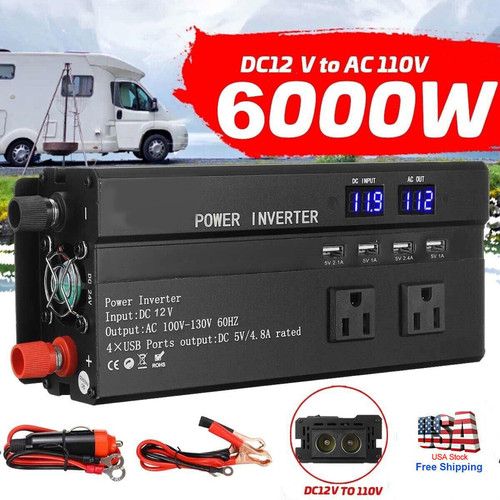
Running sensitive electronics or appliances off-grid demands a pure sine wave inverter that delivers clean, reliable AC power—without the risk of fried chargers, buzzing audio gear, or unpredictable fridge behavior. Whether you’re kitting out a van, prepping an RV, or setting up a home backup system, the right pure sine wave inverter is the backbone of your off-grid power setup. But with dozens of similar-looking boxes on the market, and specs that don’t always match real-world performance, picking the best one for your needs can be confusing and costly. Here’s how to cut through the noise and choose a pure sine wave inverter you can trust—without paying for features you’ll never use or winding up with gear that can’t handle your loads.
Comparison Table: Four Leading Pure Sine Wave Inverters for Off-Grid Power
| Product Description | Continuous Output (W) | Peak Surge (W, sec) | AC Outlets | Idle Power Draw (W) | Weight (lbs) | Key Pros | Potential Drawbacks |
|---|---|---|---|---|---|---|---|
| 1200Wh LiFePO4 Power Station with 1000W Inverter | 1000 | 2000 (2s) | 3 | 15 | 25 | All-in-one solution, plug-and-play, lithium battery included | Higher price per watt, limited expandability |
| Standalone 2000W Pure Sine Inverter (12V, hardwire-ready) | 2000 | 4000 (5s) | 2 + hardwire | 24 | 12 | Handles large appliances, robust surge, affordable | No built-in battery, requires external wiring |
| Compact 600W Pure Sine Inverter (12V, RV/van size) | 600 | 1200 (0.5s) | 2 | 7 | 5 | Very low idle draw, lightweight, fits small setups | Limited for microwaves/fridges, brief surge |
| Off-Grid Hybrid Inverter/Charger (24V, 3000W, solar input) | 3000 | 6000 (1s) | 2 + hardwire | 35 | 28 | Integrates solar charging, high surge, grid/generator input | Larger footprint, setup complexity, requires 24V battery bank |
If you want the newest model, free returns, and quick shipping, Amazon is the easiest place to compare.
See on Amazon →How to Match Inverter Size to Your Real-World Power Needs
The biggest mistake off-grid beginners make is undersizing—or wildly oversizing—their inverter. Here’s how to get it right:
- Add up your simultaneous loads. List every device or appliance you want to run at the same time. Use the actual wattage (not just the device rating)—for instance, a 700W microwave draws about 1100W from your inverter due to inefficiency.
- Account for surge loads. Many appliances (like fridges, pumps, and power tools) need 2x–3x their running wattage for a few seconds at startup. Your inverter’s surge rating should cover this, but check how long it can maintain that surge—most only hold it for 1–5 seconds.
- Don’t oversize “just in case.” A 3000W inverter running a single laptop wastes precious battery power just by being on. Choose the smallest inverter that reliably runs your real loads. For van/RV setups, 600–1200W covers most needs. For off-grid cabins or homesteads, 2000–3000W is typical if you have a fridge or well pump.
Why Pure Sine Wave Matters for Off-Grid Living
Modified sine wave inverters cost less, but their choppy output can overheat chargers, make audio gear hum, and cause motors to run hot or erratically. Pure sine wave inverters faithfully replicate grid power, so your sensitive gear—laptops, LED TVs, CPAPs, modern fridges—runs smoothly and safely. If you’re powering anything with an AC motor, induction cooktop, or electronics with a brick-style charger, don’t risk a modified sine inverter. Pure sine is non-negotiable for long-term reliability.
Key Features That Actually Matter in Pure Sine Wave Inverters
- Idle power consumption: Many inverters draw 15–40W just sitting on. For small solar or battery banks, look for idle draw under 10W—especially for weekend cabins or van setups where every amp-hour counts.
- Surge capability and duration: A 2000W inverter with only a 2500W surge won’t start a fridge or well pump. Look for at least 2x surge (e.g., 2000W continuous, 4000W surge for 2–5 seconds) if you run inductive loads.
- Input voltage: 12V inverters are easiest for vehicles and small banks. 24V (or 48V) inverters are more efficient for larger battery banks—less current, thinner cables, and less voltage drop.
- AC output options: Count the outlets—and check if you need hardwire terminals for a subpanel or transfer switch. Some all-in-ones only offer one or two outlets, limiting flexibility.
- Remote monitoring/control: For hidden installs, a wired remote (or Bluetooth app) saves crawling into tight spaces just to turn the inverter on or check status.
All-in-One Power Stations vs. Standalone Inverters: Which Makes Sense?
Self-contained power stations (portable batteries with built-in pure sine inverters) are tempting for van life, camping, or backup power. They’re plug-and-play, silent, and safe. But for permanent off-grid setups, a standalone inverter paired with your own battery bank is far more flexible and cost-effective per watt-hour. Power stations usually top out at 1500–2000W output and can’t be easily expanded. If you need to grow, run large appliances, or integrate solar/generator charging, standalone inverters win hands-down—though they require more planning.
If you want the newest model, free returns, and quick shipping, Amazon is the easiest place to compare.
Compare Options on Amazon →Frequently Asked Questions About Choosing and Using Top Pure Sine Wave Inverters
What size pure sine wave inverter do I need for a typical van or RV setup?
For most van builds and small RVs, a 600–1200W pure sine inverter covers essentials: laptops, lights, phone chargers, induction cooktops, and even a small microwave (briefly). If you plan to run an air conditioner, residential fridge, or power tools, step up to a 2000W unit—but remember, bigger inverters waste more power just by being on. Always size for your actual loads, not just “maximum possible.”
Will a pure sine wave inverter run my fridge, power tools, or air conditioner?
Yes, but you must check both the running and surge wattage. Modern fridges often need 1200–1800W surge for 1–3 seconds, even if they run at 150W. Many power tools and small AC units demand 2–3x their rated wattage at startup. Choose an inverter with a surge rating at least double the highest surge load you’ll run, and verify how long it holds that peak (ideally 2–5 seconds).
Can I use a power station instead of a traditional inverter and battery bank?
For portable, low-wattage needs (camping, van travel, CPAP backup), power stations are convenient and safe. However, they’re expensive per watt-hour and hard to expand. For permanent off-grid cabins or home backup, a standalone inverter with separate batteries and solar input is much more scalable and repairable.
How much idle power draw is too much for an off-grid inverter?
If your inverter draws more than 15W at idle, that’s 360 watt-hours wasted every 24 hours—enough to drain a small battery bank in a few days. For weekend getaways or low-use systems, look for idle draws under 10W. High-capacity inverters (3000W+) often idle higher, but some models offer “eco” or “search” modes that drop idle draw below 5W when no load is detected.
Is it safe to connect a pure sine wave inverter directly to my house panel?
Never connect an inverter directly to your home’s breaker panel unless you use a UL-listed transfer switch and follow all local codes. For backup or off-grid cabins, use dedicated circuits or outlets from the inverter, or hire a licensed electrician to integrate a transfer switch. Incorrect wiring can backfeed the grid, risking fire or electrocution.
What maintenance do pure sine wave inverters require?
Most inverters are sealed and require little routine maintenance. Keep vents clear of dust, check all cable connections for tightness and corrosion quarterly, and periodically verify the cooling fan operates. For inverters exposed to vibration (RVs, vans), inspect mounting brackets and wiring regularly to prevent chafing or loosening.
Summary: Choosing a Pure Sine Wave Inverter You Can Rely On
To get reliable, long-lasting AC power off-grid, match your inverter’s size to your real loads, not just marketing hype. Prioritize low idle draw, robust surge capability, and the right input voltage for your battery bank. All-in-one power stations offer simplicity for small setups, but standalone inverters give the most flexibility and value for larger systems. Always buy from a reputable source, and don’t skimp on safety—your electronics and appliances will thank you.
Related Guides
- Amp Hours vs Watt Hours: What’s the Real Difference?
- Portable Power Stations for Camping: Which Ones Are Worth It?
- Portable Generators vs Inverter Generators: What’s the Real Difference?
- Our guide to Understanding 12V Solar Charge Controller Circuit Diagrams: What Matters Most
- Our guide to Choosing the Best Solar Generator Kit for Home Backup Power
- Browse all Power Inverters →