8 min read
Disclosure: As an Amazon Associate and eBay Partner Network publisher, we earn from qualifying purchases. This doesn’t affect what we recommend or how we describe it.
Most guides treat auto start modules for generators as a one-size-fits-all upgrade—just pick a controller, wire it in, and you’re set. The reality is messier: the best module for your setup depends as much on your generator type and control needs as it does on your budget. Over-buy and you’ll waste money on features you never use; under-buy and you could be left without critical safety or monitoring functions, especially in off-grid or backup scenarios. Here’s how to choose the right auto start module using real, currently-available models, and what actually sets them apart.
Top picks at a glance
- Deep Sea Electronics DSE7320 Auto Start Controller Module — the most advanced option for full-featured generator control
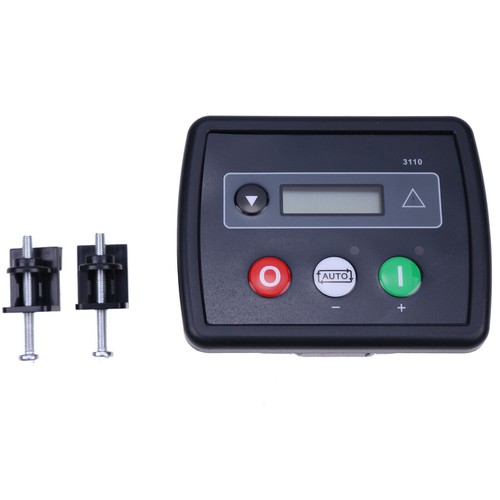
- Deep Sea Electronics DSE3110 Auto Start Control Module — the budget pick for basic auto start needs
- SmartGen MGC120 Auto Start Generator Controller Module — the best alternative to Deep Sea for gasoline generators
Spot the difference between today’s top auto start modules
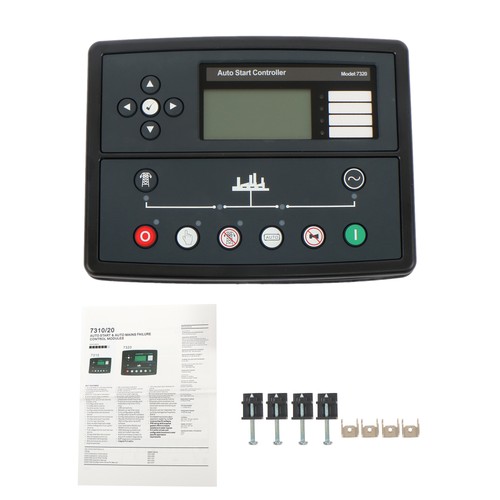
Pictured: DSE7320
| Product | Condition | Price | Best For | Engine Compatibility | Advanced Monitoring |
|---|---|---|---|---|---|
| Deep Sea Electronics DSE7320 Auto Start Controller Module |
New | $$$ | Full-featured generator control | Diesel, some gas | Yes (multi-parameter) |
 Deep Sea Electronics DSE3110 Auto Start Control Module Deep Sea Electronics DSE3110 Auto Start Control Module |
New | $ | Basic auto start needs | Diesel | Limited (basic alarms) |
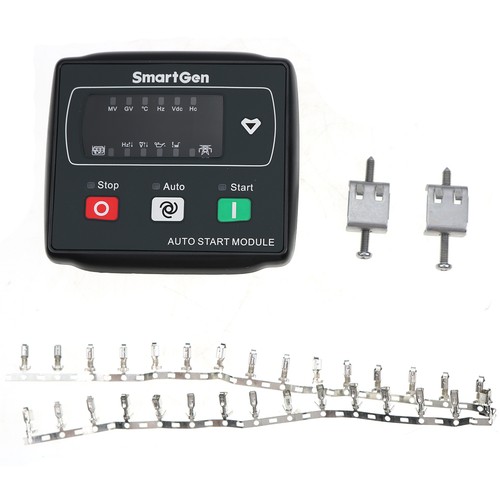 SmartGen MGC120 Auto Start Generator Controller Module SmartGen MGC120 Auto Start Generator Controller Module |
New | $$ | Best for gasoline generators | Gasoline, some diesel | Yes (digital display) |
Price: $ = budget, $$ = mid-range, $$$ = premium — relative to the options compared above. Live prices and current stock are below.
Choose the right module for your generator and use case
Not all auto start modules handle the same engine types or offer the same level of control. Based on listed compatibility and features, here’s how the three main options break down:
- For full-featured monitoring and broad compatibility: The Deep Sea Electronics DSE7320 Auto Start Controller Module is the most advanced of the group. It supports both diesel and some gasoline generators, with multi-parameter monitoring including voltage, current, frequency, and engine parameters. If you need remote monitoring, comprehensive alarms, or integration with automatic transfer switches, this is the module to shortlist. It’s priced at the premium tier, but you’re paying for depth: dozens of programmable inputs/outputs, event logging, and networked control.
- For straightforward, budget-friendly diesel setups: The Deep Sea Electronics DSE3110 Auto Start Control Module is the most affordable option here. It focuses on basic functions: start/stop automation, basic engine protection, and simple alarms. There’s no advanced monitoring, but if your generator is diesel and you don’t need remote access or detailed fault diagnostics, the DSE3110 covers the essentials at the lowest price tier.
- For gasoline generators or as a Deep Sea alternative: The SmartGen MGC120 Auto Start Generator Controller Module is positioned as the best alternative for gasoline engine compatibility. It adds a digital display, supports both gas and some diesel engines, and covers most typical auto start and protection needs. Feature-wise, it sits between the other two: more advanced than the DSE3110, but not as fully featured as the DSE7320. The price reflects that middle ground.
Dig deeper: When does it make sense to pay for advanced features?
It’s easy to assume you need every feature a modern controller offers, but many off-grid and backup users never touch half the programmable options. Here’s where each module’s feature set really matters:
- Comprehensive remote monitoring: Only the DSE7320 offers event logging and advanced alarms across multiple engine and generator parameters. If you run a critical backup generator, or need to track generator health over time, this is the level of control that justifies the extra spend.
- Basic automatic start/stop: For setups where you just need the generator to kick in when the power drops or a relay closes, the DSE3110 is sufficient. It offers starter control, undervoltage/overvoltage alarms, and some basic engine protection (like low oil shutdown).
- Gasoline engine compatibility: The SmartGen MGC120 stands out for supporting gasoline generators, which most budget modules skip. Its digital display is also easier to read for quick checks, and it covers the standard start/stop logic and alarms without the complexity of the DSE7320.
How we evaluated these generator auto start modules
To build this shortlist, the focus was on modules with clearly listed manufacturer specs, distinct positioning (budget, mid-range, and full-featured), and compatibility with real-world off-grid and backup generator setups. The most important decision factors were:
- Engine compatibility: Diesel vs. gasoline support is critical—modules like the DSE3110 work only with diesel, while the SmartGen MGC120 and DSE7320 cover both.
- Monitoring and alarms: Quantifiable features like the number of alarm channels, type of display (digital vs. analog), and support for remote monitoring.
- Programmability and integration: Number of input/output channels, ability to interface with transfer switches, and support for event logging.
- Value for money: Price tier compared to feature set. The DSE3110 is the clear budget pick; the DSE7320 is for buyers who need comprehensive control and are willing to pay for it.
Only products with verifiable specs and clear manufacturer support were included. Unbranded modules and listings without real documentation were excluded, as were bundles that mixed controllers with unrelated wiring kits. If you’re running a modern inverter generator with built-in auto start, or if you’re looking for a module for RV or marine use with highly specialized integration, you may need a different solution—these modules target stationary backup and off-grid home generator systems.
For more on generator controller standards and what to expect from listed features, see the Electrical Generating Systems Association, which provides technical resources for generator controls and monitoring.
Related Guides
- Our guide to Choosing the Best Solar Generator Kit for Home Backup Power
- How to Buy a Solar Generator: A Practical Guide for Beginners
- How to Choose the Right Portable Inverter Kit for Your Generator
- Our guide to How Often Should You Change Generator Oil?
- Need Help Troubleshooting Off-Grid Power Systems? Start Here
- Browse all Off Grid Generators →
Beginner’s pre-purchase checklist
- Confirm your generator’s engine type (diesel or gasoline)—compatibility varies by module.
- Check the voltage and frequency range your generator operates at (e.g., 120/240V, 50/60Hz).
- Verify that your generator has the necessary start/stop signal wiring available—some models require specific relay types.
- Measure available panel space—modules like the DSE7320 are physically larger than basic controllers.
- List the alarms and monitoring features you actually need (oil pressure, battery voltage, temperature, etc.).
- Determine if you need remote monitoring or integration with an automatic transfer switch.
- Review the installation manual for each module to ensure you’re comfortable with the required connections and setup.
Which module is worth it for you?
If you need full-featured generator management, programmable alarms, and remote monitoring, the DSE7320 is the standout—especially for larger or critical backup systems. For straightforward diesel setups where cost matters most, the DSE3110 covers the basics with little fuss. Gasoline generator owners, or anyone wanting a digital display without the premium price tag, should look at the SmartGen MGC120.
The main pitfall is mismatching your controller to your engine type or overpaying for complexity you won’t use. Double-check your generator’s wiring and control requirements before buying, and always consult your generator’s manual or a qualified technician if you’re unsure about compatibility or safe installation. For a deeper dive into generator safety and automatic transfer switch integration, the Occupational Safety and Health Administration provides practical guidelines.
Frequently asked questions about auto start modules for generators
Will these modules work with inverter generators?
Most inverter generators have proprietary control circuits and may not be compatible with third-party auto start modules like the DSE3110, DSE7320, or SmartGen MGC120. Always check your generator’s manual or contact the manufacturer before attempting to add external controls.
How many monitoring parameters does the DSE7320 support?
The DSE7320 provides multi-parameter monitoring, including voltage, current, frequency, engine oil pressure, coolant temperature, and battery voltage—typically covering at least 6-8 critical data points. This depth of monitoring is not matched by the DSE3110 or SmartGen MGC120.
Is the price difference between the DSE7320 and DSE3110 justified?
It depends on your needs. The DSE7320’s higher price reflects its advanced monitoring, programmability, and remote access features. If you only need basic start/stop automation for a diesel generator, the DSE3110 usually suffices, saving money without sacrificing critical protection.
Which module is better for gasoline generators—SmartGen MGC120 or DSE7320?
For gasoline generators, the SmartGen MGC120 stands out for its listed compatibility and straightforward feature set. The DSE7320 does support some gasoline models but is more often used with diesel. For most gas generators, the SmartGen is the more practical and cost-effective choice.
Can I return or exchange these modules if they don’t fit my setup?
Return and exchange policies depend on the retailer or platform where you purchase the module. Always review return terms before ordering, and keep original packaging in case you need to send the unit back. Buying from reputable sellers increases your chances of a smooth return process.
How long does installation typically take for a new auto start module?
Installation time varies by generator model and your familiarity with control wiring. For most users, expect 1–3 hours for physical mounting and wiring, plus additional time for programming and testing. If you’re unfamiliar with generator wiring, professional installation is strongly recommended for safety.



Last updated: July 2026 · About our research