8 min read
Disclosure: As an Amazon Associate and eBay Partner Network publisher, we earn from qualifying purchases. This doesn’t affect what we recommend or how we describe it.
Most guides make balancing a lithium battery pack sound like a one-time technical task or a simple checkbox on your build list. In reality, keeping your pack balanced is an ongoing process—and the right approach depends on your battery type, your monitoring gear, and how often you push your system to its limits. Skip this step, and even the best off-grid setup can lose capacity, run out of sync, or develop costly problems down the road. Here’s what actually matters when it comes to balancing lithium cells for off-grid use, and how to make the right balancing decisions for your system—whether you’re building from scratch or managing a ready-made power station.
Lithium Battery Balancing: What’s Really at Stake?
Every lithium battery pack—whether it uses LiFePO4, NMC, or another chemistry—relies on multiple cells wired together to reach the voltage and capacity you need. Over time, cells can drift apart in voltage, causing one cell to overcharge or over-discharge before the others. This is called cell imbalance. Left unchecked, imbalance can reduce your usable capacity, trigger early cutoffs, or even damage the pack. For off-grid users, this means less reliable power when you need it most.
Balancing keeps each cell in sync, maximizing your pack’s lifespan and performance. The right balancing strategy depends on your setup: DIY battery builds, modular “drop-in” packs, and portable power stations all need different approaches. The table below compares the main balancing options for off-grid lithium systems—so you can match your choice to your needs, budget, and technical confidence.
Comparison Table: Popular Lithium Battery Balancing Approaches
| Approach | Typical Use Case | Balancing Method | Cell Count Supported | Key Pros / Cons |
|---|---|---|---|---|
| Basic Internal BMS Pack | Plug-and-play drop-in batteries | Passive (resistive) balancing | 4–8 cells (12V/24V) | Easy install; limited balancing current (50–100mA); not for high-drain/large packs |
| DIY Pack with External BMS | Custom builds, high-capacity banks | Active or passive balancing | 4–16+ cells (12–48V) | Customizable; supports large packs; requires setup and monitoring skills |
| Manual Top-Balancing (Bench Power Supply) | Initial DIY pack assembly | Manual, per-cell charging | Any (4–16+) | Low cost; time-consuming; not ongoing—must monitor carefully |
| Portable Power Station | Turnkey all-in-one solutions | Factory-programmed BMS | 4–8 cells (12V/24V) | Zero setup; balancing not user-serviceable; limited repair options |
Beginner’s pre-purchase checklist
- Count your battery cells—know if you have a 4S, 8S, or other configuration before shopping for a BMS or balancer.
- Verify your battery chemistry (LiFePO4, NMC, etc.)—balancing voltages and limits differ by type.
- Check the maximum charge/discharge current your system draws—choose a BMS rated at least 20% higher than your peak loads.
- Measure the physical space available for a BMS or balancer board—some active balancers are bulky.
- Review your charging source (solar, generator, grid)—some balancing systems require a specific minimum voltage to operate.
- Confirm your comfort with monitoring—are you willing to use a cell-level voltage checker, or do you prefer set-and-forget?
- Read the warranty terms for any battery or BMS—some require proof of proper balancing for claims.
How to balance lithium battery pack: step-by-step for off-grid reliability
- Check cell voltages with a reliable meter. Power down your pack and use a cell-level voltmeter to measure each cell. Record the readings—imbalances over 0.05V (for LiFePO4) may need correction.
- Top-balance cells if needed. For new or heavily imbalanced packs, use a bench power supply to charge each cell individually to the target full voltage (e.g., 3.65V for LiFePO4), matching them as closely as possible.
- Install or verify your BMS. Connect a BMS designed for your cell count and chemistry. Ensure all cell taps are properly connected and the BMS is securely mounted (within the rated temperature range).
- Enable balancing function. Many BMS units require you to activate balancing (often via a button, DIP switch, or app). Confirm balancing is enabled and set for your chemistry’s safe voltage range.
- Charge the pack fully and observe. Use your regular charger to bring the pack to full. Monitor cell voltages—balancing circuits typically operate near full charge. Look for all cells to finish within 0.01–0.03V of each other.
- Recheck after several cycles. Use the system for a few charge/discharge cycles, then repeat the cell voltage check. If drift persists, investigate possible weak cells or review BMS specs for balancing current limits.
Why passive balancing works for most off-grid users
Passive balancing is the default method in most internal BMS packs and turnkey power stations. It works by bleeding off a small amount of charge from higher-voltage cells through resistors, letting the rest catch up. For four-cell (12V) or eight-cell (24V) packs in moderate daily use, this method is usually enough—as long as your loads and charging sources are well-matched to your battery’s specs. Most passive balancers handle 50–100mA per cell, which is plenty for routine imbalance but too slow if you regularly push your pack to its limits or have one weak cell dragging the rest down.
For RVs, cabins, or vans where you rarely run the battery fully flat or fully charged, a passive BMS offers a good mix of safety and simplicity. But if you notice your usable capacity shrinking, or your BMS cutting out early, check cell voltages—persistent imbalance may call for a more active approach.
See today’s dealsActive balancing: when—and why—you might need it
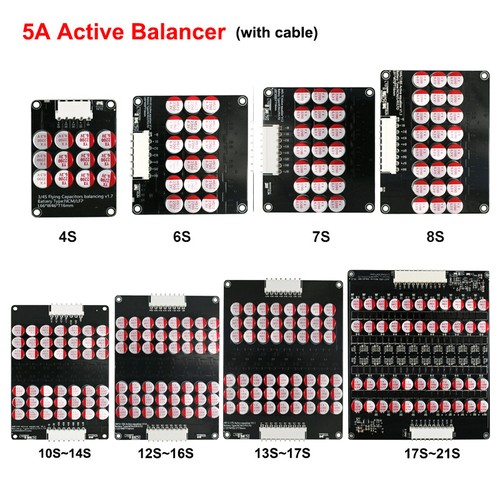
Active balancing circuits move charge directly from higher-voltage cells to lower-voltage ones, rather than wasting it as heat. This approach is popular in large, high-drain systems (think battery banks over 200Ah, or 48V setups with 16+ cells) and for anyone who cycles their batteries hard every day. Active balancers typically support balancing currents from 1A up to 5A or more—enough to keep even big packs in sync during heavy use.
The trade-off? Active balancers cost more, are physically larger, and may require more setup (sometimes needing a separate power source). Not every off-grid user needs one—if your system is small, cycled gently, or you’re using a reputable drop-in pack, passive balancing is usually enough. But for anyone building a big custom system or running close to the edge, active balancing can be a smart long-term investment. For more on battery balancing fundamentals, see Battery University.
Check current pricesRelated Guides
- Choosing the Right Lithium Battery Heater: What Actually Works
- How to Balance a Battery Bank: Step-by-Step Guide for Beginners
- Choosing the Best Deep Cycle Battery for Off-Grid Power
- The Best Battery Monitors, Reviewed for Reliable Off-Grid Power
- Our guide to Lithium Batteries for RVs, Reviewed
- The Best Portable Battery Boxes for Off-Grid Power
- Browse all Deep Cycle Batteries →
FAQs: Real-world lithium battery balancing questions answered
How often should I check cell balance in my off-grid lithium pack?
For most off-grid users, checking cell voltages every 3–6 months is enough—unless you notice a drop in capacity or early cutoff. DIY packs or high-drain systems may need monthly checks, especially after heavy use or storage periods.
Is manual top-balancing necessary for every lithium battery build?
Manual top-balancing is critical for new DIY packs or after replacing cells. It ensures all cells start at the same voltage, preventing early imbalance. For factory-built “drop-in” batteries or power stations, this step is typically done at the factory and isn’t required by the user.
Passive vs active balancing—which is better for a 200Ah 24V bank in a full-time cabin?
For a 200Ah 24V (8-cell) bank cycled daily, active balancing offers better long-term cell health—especially if your loads vary or you regularly cycle deeply. Passive balancing is simpler but may struggle to keep up over years of hard use. Factor in your budget and willingness to monitor the system.
How much voltage difference is safe between cells before balancing is needed?
For LiFePO4, a difference of 0.05V or less between cells at full charge is considered normal. If you see differences of 0.10V or more, balancing action (manual or automatic) is recommended to prevent long-term damage or capacity loss.
What happens if I never balance my lithium battery pack?
Cells will drift apart in voltage, causing the weakest cell to trigger early BMS cutoffs or suffer over-discharge. Over time, you’ll lose usable capacity and risk damaging one or more cells—shortening the life of your whole pack.
Can I add a balancer to an existing plug-and-play lithium battery?
Most sealed “drop-in” lithium batteries have internal BMS units that handle balancing. Adding an external balancer is usually not possible or recommended, as it can void the warranty or interfere with built-in protections. Choose a battery with a robust BMS from the start, and check warranty terms before any modification.
How long does the balancing process take for a typical 100Ah 12V LiFePO4 pack?
Passive balancing can take several hours to a full day to bring cell voltages within 0.01–0.03V of each other, depending on the degree of imbalance and the balancer’s current (often 50–100mA). Active balancers work faster—often within 1–2 hours for mild imbalance.
When to seek expert help or advanced tools
For most off-grid users, a quality BMS and periodic cell checks keep your system running strong. If you find persistent imbalance, suspect a weak cell, or plan to build a large high-voltage bank, consider consulting a battery specialist or using advanced tools like cell loggers and programmable balancers. For more technical background on lithium safety and standards, see the Society of Automotive Engineers.
Keeping your lithium battery pack balanced isn’t just a technical chore—it’s the foundation for years of reliable off-grid power. With the right approach and a little regular attention, you’ll get the most out of every amp-hour—no matter where your adventures take you.


Last updated: July 2026 · About our research