7 min read
Disclosure: As an Amazon Associate and eBay Partner Network publisher, we earn from qualifying purchases. This doesn’t affect what we recommend or how we describe it.
Most solar guides treat cable connectors as an afterthought—just plug and play, right? In reality, the wrong connector can cause voltage drop, unreliable connections, and even dangerous overheating in your off-grid system. The best connector for your setup depends on amperage, installation style, weather exposure, and future expandability. Let’s cut through the confusion so you can pick connectors that won’t let you down when you’re miles from the nearest hardware store.
What most buying guides get wrong about solar panel cable connectors
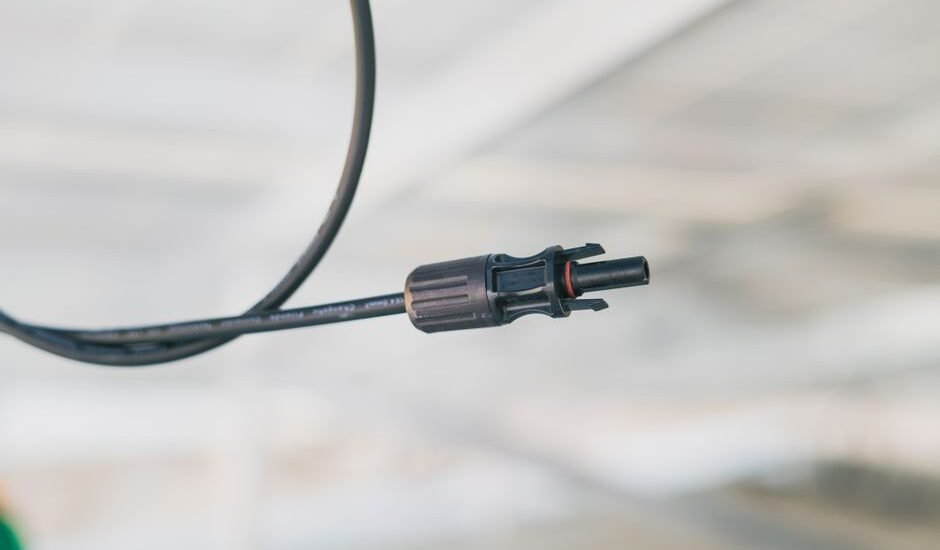
Many articles suggest “just get MC4 connectors” without considering that not all connectors are created equal, and MC4 isn’t the only game in town. For off-grid systems, especially where you might need to add panels later, run longer cable distances, or frequently set up and break down (like with portable RV or van kits), the connector choice has a real impact on reliability and safety. Here’s a practical comparison of the most common connector types and setups you’ll actually encounter.
Comparison of common solar panel cable connector categories
| Connector Category | Max Current (A) | Weatherproof Rating | Ease of Installation | Price | Typical Use Case |
|---|---|---|---|---|---|
| Standard MC4 (crimped) | 30A | IP67 | Requires crimp tool | $ | Permanent outdoor solar arrays |
| MC4-Compatible Quick Connect | 20A | IP65 | Tool-free, push-fit | $$ | Portable or temporary setups |
| Anderson Powerpole 45A | 45A | — | Easy, modular | $$$ | Custom DC circuits, high-current needs |
| Screw Terminal Block | 25A | None | Screwdriver only | $ | Indoor, panel-to-controller wiring |
Price tiers ($/$$/$$$) read across this comparison only — they mark each product’s relative position from cheapest to priciest in the set. Actual prices live below.
Beginner’s pre-purchase checklist
- Check the maximum amperage output of your solar panels—match connector rating to at least 125% of this value.
- Measure cable size (AWG) you plan to use—connector pins must fit 10–12 AWG for most off-grid panels.
- Verify weather resistance—look for IP67/IP65 rated connectors for any outdoor or roof-mount runs.
- Count the number of panel strings and branch connections needed—some connectors only work in pairs, others support Y-branching.
- Inspect your charge controller input type—some require bare wire, some accept MC4, others need ring lugs or ferrules.
- Assess if you’ll need to frequently disconnect panels (for storage, transport, or troubleshooting)—choose connectors that support repeated cycles.
- Make sure you have or can borrow the correct crimping or assembly tool before buying connectors that require them.
The spec almost nobody talks about: cable gauge compatibility
Most connector packaging lists a maximum amperage, but the real-world limitation often comes down to what cable size (gauge) the connector will accept. For off-grid systems, 10 AWG is common for 12V–24V panels, but some connectors only fit up to 12 AWG. For a safe, low-loss connection, always confirm your cable fits snugly in the connector’s metal barrel—too loose and you risk arcing, too tight and you’ll damage the strands. If you’re running more than 20 feet of cable, consider stepping up to 8 AWG and double-check that your chosen connector supports it.
See today’s dealsPermanent vs. portable: how setup style changes your connector choice
Permanent roof-mounted arrays benefit from waterproof MC4 or similar connectors that, once crimped and locked, rarely need to be touched. For portable setups—such as folding panels for RVs, or ground deploy kits for cabins—quick-connect options save hassle. MC4-compatible push-fit types are easier to connect and disconnect, but are less robust under constant motion or exposure. Anderson Powerpole connectors, while not waterproof, are favored in mobile ham radio and some van conversions for their high current rating and modularity, but you’ll need a weatherproof enclosure for outdoor use.
Compare optionsWhy weatherproofing matters (and what IP ratings really mean)
Outdoor connectors face rain, dust, and UV exposure. IP67-rated connectors can survive temporary immersion (think: heavy rain or puddle splash), while IP65 is only rated for water jets (rain, but not submersion). If your connectors will be permanently exposed, don’t settle for less than IP67. For connectors inside a weatherproof junction box or inside your van/RV, IP65 or even non-rated options are fine. Don’t forget: even “waterproof” connectors need to be fully mated and clicked shut—an unseated MC4 is no better than an open wire nut.
Planning for future expansion: branching and disconnects
If there’s any chance you’ll add more panels later, plan your connector layout accordingly. MC4 Y-branch connectors (rated to 30A per branch) let you parallel multiple panels, but not all connectors are compatible with these adapters. For larger systems, terminal blocks or Anderson connectors support custom branching, but require careful current calculations to avoid exceeding their amp rating. Always size your connectors and branch devices for your system’s maximum possible current, not just what you’re running today.
View what’s availableRelated Guides
- Choosing the Right Solar Panel Cable Connectors: What to Know Before You Buy
- Our guide to How to Choose the Right Solar Panel Tilt Mount for Your RV
- Choosing the Best Solar Generator Kit for Home Backup Power
- Folding Solar Panel Kits That Are Actually Worth Buying
- Our guide to Motorized Solar Panel Tilt Mounts for Easy Solar Tracking
- Our guide to Off-Grid vs Grid-Tie Inverters: Which Is Right for Your Solar Setup?
FAQs: real-world questions about choosing the right solar panel cable connectors
How do I know what size connector I need for my solar panels?
Check your panel’s rated output in amps. Choose a connector rated at least 25% higher than this to handle occasional surges and sunlight intensity spikes. For example, a 10A panel should use connectors rated for at least 12.5A, but most off-grid setups default to 20A or 30A connectors for margin.
MC4 vs Anderson Powerpole—what’s better for portable solar setups?
MC4 connectors are superior for weatherproof outdoor use and are standard on most panel leads. Anderson Powerpole connectors are easier to connect/disconnect and support higher currents (up to 45A per pair), but require extra weatherproofing if used outdoors. For frequent setup and takedown, Andersons are more user-friendly, but MC4 is safer in wet conditions.
Can I mix different connector types in one solar system?
You can, but every transition point increases resistance and possible failure points. Use compatible adapters if you must join MC4 to Anderson or screw terminals, and always check that the combined current rating meets or exceeds your highest panel output. Avoid chaining more than two adapters in a row.
How long do solar cable connectors typically last outdoors?
Quality MC4 connectors, when properly installed and left undisturbed, can last 10–20 years outdoors. Cheaper connectors or those exposed to constant movement may show corrosion or lose weatherproofing in as little as 3–5 years. Inspect all connections yearly and replace any with visible damage or looseness.
What happens if I use undersized connectors or cables?
Undersized connectors or cables can overheat, causing voltage drops, melted insulation, or even fire. Always match the connector and wire gauge to your system’s maximum expected current, with at least a 25% safety margin. Never force a large wire into a small connector—it won’t make a safe connection.
What should I look for in connector warranties or return policies?
Look for connectors with at least a one-year warranty and clear compatibility information for wire gauge and weather rating. Some vendors offer return windows if connectors arrive damaged or don’t fit your cable. Avoid “no-name” bulk packs with no support or documentation, as these are more likely to fail early.
Final thoughts: why the right connector pays for itself off-grid
It’s tempting to cheap out on connectors or grab whatever fits, but in off-grid power, reliability matters more than saving a few bucks. Well-chosen connectors prevent downtime, overheating, and hours of frustrating troubleshooting. For more detail on solar wiring and safe gear selection, check out Solar Power World or browse your local electrical supplier’s reference guides. Choose connectors that fit your system’s current, cable size, and environmental needs—and you’ll have one less thing to worry about when the sun is shining.


Last updated: June 2026 · How we cover this topic