9 min read
Do dirty solar panels really sap enough power to matter—and is cleaning them worth the trouble? For anyone running an off-grid system, the answer is yes: even a thin film of dust or pollen can cut your output by 5–20%, and in some climates, grime build-up can slash production by a third or more. But not every cleaning method is safe, effective, or worth the money. Here’s how to pick the right solar panel cleaning technique for your setup, climate, and budget—so you get the power you paid for without risking your gear or wasting time.
What most buying guides get wrong about solar panel cleaning gear
Most solar panel cleaning advice is aimed at big commercial arrays or grid-tied rooftops—where a pro crew shows up with hoses and harnesses. Off-grid users face a different set of realities: you might be cleaning panels on an RV roof, a ground rack on a homestead, or a van that’s been down a muddy backroad. Water access, reach, and time all matter. And unlike giant utility arrays, your output is precious—losing 10% means running the generator more often or risking a fridge shutdown. The right cleaning method depends not just on what’s dirtying your panels, but on where and how you use them.
Comparison table: Four solar panel cleaning techniques for off-grid users
| Method | Water Use (per cleaning) | Reach/Access | Time Required (4 panels) | Panel Safety Risk |
|---|---|---|---|---|
| Manual soft brush & deionized water | 2–4 liters | Arm’s length only | 15–20 min | Very low |
| Extendable pole brush with hose feed | 6–8 liters | Up to 5 meters | 10–15 min | Low–medium |
| Portable pressure sprayer (hand pump) | 1–3 liters | Arm’s length only | 20–30 min | Low |
| Dry microfiber mop or pad | 0 liters | Arm’s length or pole | 10–20 min | Medium (scratches if gritty) |
Quick decision tree
- If water is scarce or hard to haul: Dry microfiber mop or a hand-pump sprayer uses the least water, but check for grit first to avoid scratching.
- If your panels are hard to reach (tall roof or big rack): Extendable pole brush with hose feed is the safest way to reach without climbing.
- If you want maximum panel safety and don’t mind a little work: Manual soft brush with deionized water is the gentlest, especially for new or warrantied panels.
- If you need to clean fast and often, and don’t mind using more water: Pole brush with hose feed saves time on big arrays or frequent cleanings.
- If you’re worried about scratches or warranty issues: Skip dry methods unless you’re sure panels are just dusty, not gritty.
Manual brush and deionized water: safest for sensitive panels
For new panels or systems still under warranty, a soft-bristle brush and deionized (DI) water is the gold standard. DI water leaves no mineral spots, which matters if your local water is hard. Use a brush with flagged bristles (ends look split, not sharp) and a handle short enough to avoid overreaching—never use abrasive pads or kitchen sponges. You’ll need 2–4 liters of water for four standard 100W panels. This method is slow, but it’s the least likely to scratch glass or damage anti-reflective coatings. If you’re cleaning flexible or thin-film panels, soft brush and DI water is the only method most manufacturers recommend.on DI water kits and flagged brushes.
Extendable pole brush with hose: best for high or hard-to-reach panels
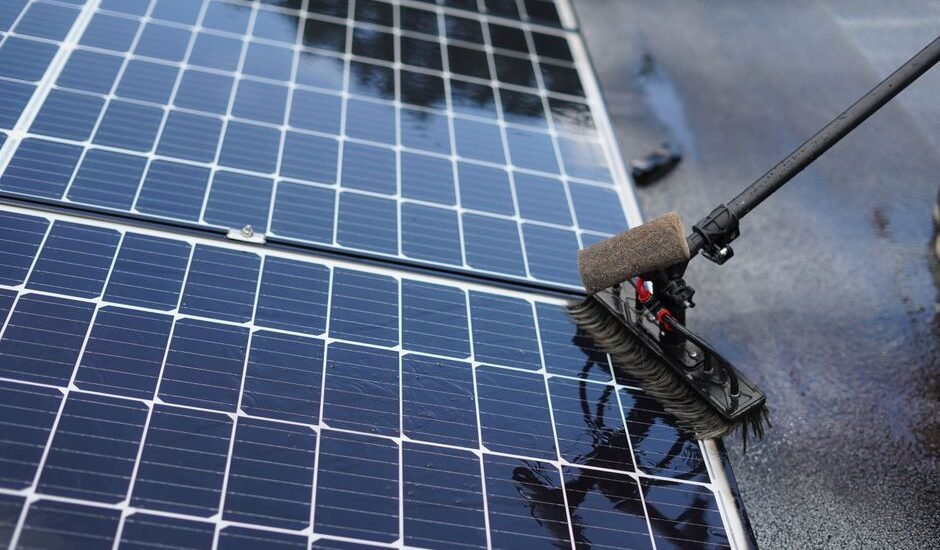
If your panels are on a steep roof, ground rack, or RV where you can’t reach all corners easily, an extendable pole brush with a built-in hose feed lets you scrub and rinse without climbing up. Look for poles with a minimum reach of 3 meters (5 meters is better for high racks), and brushes with soft bristles at least 25 cm wide. Some kits have inline filters or DI resin canisters to reduce water spots. You’ll use more water—up to 8 liters for four panels—but you can clean faster and stay safe on the ground. Avoid using full-pressure hose jets; stick to moderate flow to prevent seal damage. See today’s deals on pole brush sets with water-fed handles.
Portable pressure sprayers: mobile cleaning for van life and remote setups
Hand-pump pressure sprayers (like those used for gardening) are a game-changer for mobile setups where water is precious and power is limited. A 5-liter sprayer can tackle a full roof of panels on a single fill. Pair with a microfiber cloth or soft brush for stubborn spots. The pressure is gentle enough not to force water under panel edges, but strong enough to lift pollen or dust. For panels mounted flat on a van or trailer, this is often the only way to clean without climbing or hauling buckets. Sprayers with adjustable nozzles let you fine-tune the spray for rinsing or spot cleaning. View what’s available in portable sprayers and cleaning heads.
Dry microfiber cleaning: fast, but not for gritty grime
When panels are just dusty (think desert or dry-season pollen), a dry microfiber mop or pad can lift debris without water. This is the fastest method—especially useful for daily or weekly touch-ups. Use only high-quality microfiber with a dense, plush pile (at least 300gsm) to avoid scratching. Never use dry cleaning if panels are caked with mud, soot, or gritty sand—these particles can leave micro-scratches that permanently reduce output. If in doubt, do a “fingertip test”: if you can feel grit, use water. For flexible panels, dry microfiber is less safe; always follow manufacturer guidelines.
Related Guides
- Folding Solar Panel Kits That Are Actually Worth Buying
- Our guide to Motorized Solar Panel Tilt Mounts for Easy Solar Tracking
- How to Choose the Right Solar Panel Tilt Mount for Your RV
- How to Test Solar Panel Output: A Practical Guide
- Why Does Solar Panel Voltage Drop When You Connect a Load?
- Our guide to A No-Nonsense Guide to Solar Panel Mounting Brackets That Last
- Browse all Solar Panels Kits →
The spec almost nobody talks about: water quality for solar cleaning
Water spots can be as bad as dust when it comes to solar output. Tap water with high mineral content leaves white spots that scatter sunlight, especially in sunny, arid regions. If you notice streaks or crust after cleaning, switch to deionized or distilled water—never use high-pressure well water or unfiltered river water, as these can deposit grit or minerals. In areas with soft rainwater, a simple rain barrel catchment can provide spot-free rinse water for most of the year. The U.S. Department of Energy notes that water purity is especially important for panels with anti-reflective coatings.
How often should you clean your solar panels?
Frequency depends on your environment. In dusty zones (desert, farms, wildfire-prone areas), panels may need cleaning every 2–4 weeks in dry season. In temperate or rainy climates, twice per year may be enough. Bird droppings, tree sap, or pollen call for spot cleaning ASAP—they can block light almost entirely. Monitor your system’s daily output: if you see a persistent 5–10% drop compared to typical days, check for dirt. Some off-grid users log daily kWh in a notebook or app to spot trends. For most, a quick monthly visual check is plenty.
FAQs: Real-world answers to common solar panel cleaning questions
How often should I clean my solar panels in a dusty climate?
In dusty or dry regions, a cleaning interval of every 2–4 weeks is typical during peak dust season. If you notice visible build-up or your daily watt-hour production drops by more than 10%, it’s time to clean. Spot cleaning after dust storms or wildfires may be needed more often.
Manual brush vs. pole brush—what’s better for RV or van roofs?
Pole brushes are safer for RV and van roofs because they let you clean from the ground or a small step stool, reducing fall risk. Manual hand brushes are fine if you can reach all panels safely, but most roofs are too wide. For frequent cleanings, a pole brush with a water feed is worth the investment.
Can I use regular tap water to clean my panels?
You can use tap water if it’s low in minerals (soft water), but hard water often leaves spots that reduce output. If you see white streaks or crust after cleaning, switch to deionized or distilled water. Rainwater is usually spot-free as well.
Will a pressure washer damage my solar panels?
Yes, high-pressure washers can force water under panel frames, damage seals, or even crack the glass if used up close. Stick to low-pressure hand sprayers or gentle hose flow. Most manufacturers void warranties for panels cleaned with pressure washers.
How much power loss can dirty panels really cause?
Even a light coating of dust can reduce output by 5–10%. Heavy grime, bird droppings, or soot can cut power by 20–30% or more. For a 400W off-grid array, losing 10% means 40W less—enough to run a fridge or charge a laptop. Over a month, that’s a significant hit to your energy budget.
What should I look for when buying cleaning gear for flexible or thin-film panels?
Flexible and thin-film panels scratch more easily than rigid glass. Always use a flagged-tip soft brush or high-pile microfiber (300gsm+), and never scrub with dry cloth if there’s any grit. Avoid stiff bristles or abrasive pads. Check that your cleaning tool’s width fits your panel size—narrow heads (20–30cm) are easier to control on small or flexible modules.
Is there a warranty or return risk with certain cleaning methods?
Most panel warranties exclude damage from improper cleaning—scratches, seal failures, or glass cracks from harsh tools or pressure washing are usually not covered. Always check your panel’s manual for approved methods, and keep receipts for cleaning gear in case you need to prove proper care for a warranty claim.
What the pros do differently: tips for streak-free, safe cleaning
Professional solar cleaners use DI water, soft brushes, and clean in the early morning or late evening to avoid streaks from rapid drying. They also check panel temperatures—never clean hot panels, as cold water on hot glass risks cracks. For off-grid setups, clean when panels are cool (dawn or dusk), and use a squeegee or dry microfiber to finish if water spots are an issue. Always check for loose wires or cracked glass before and after cleaning; early detection prevents bigger problems. For more on solar panel maintenance best practices, see the International Energy Agency.
Final thoughts: Pick the right method and protect your power
Getting the most from your off-grid solar panels isn’t just about buying the right gear—it’s about keeping them clean, safely and efficiently. Choose a cleaning method that fits your water access, reach, and panel type. Invest in soft brushes, spot-free water, and the right pole for your setup. Keep a log of your panel output to spot when cleaning is needed, and always err on the side of caution to protect your investment and your warranty. Your panels are your power supply—give them the care they deserve, and they’ll keep your lights on for years to come.
Last updated: July 2026 · Our research process