7 min read
How much solar power do you really need to keep your off-grid batteries charged? The answer hinges on a number most people overlook: the charge efficiency factor. If your batteries claim a 200Ah capacity, but you only get 160Ah out after charging, you’re paying for lost energy—and may be undersizing your solar array. Understanding charge efficiency factor is critical for anyone sizing batteries, solar panels, or generators for off-grid living. Let’s break down what this number means, how it varies by battery type, and how to use it to avoid running short on power.
Spot the difference between battery types: Charge efficiency factor comparison
| Category | Typical Charge Efficiency Factor | Battery Chemistry | Usable Capacity (% of rated) | Maintenance Needs |
|---|---|---|---|---|
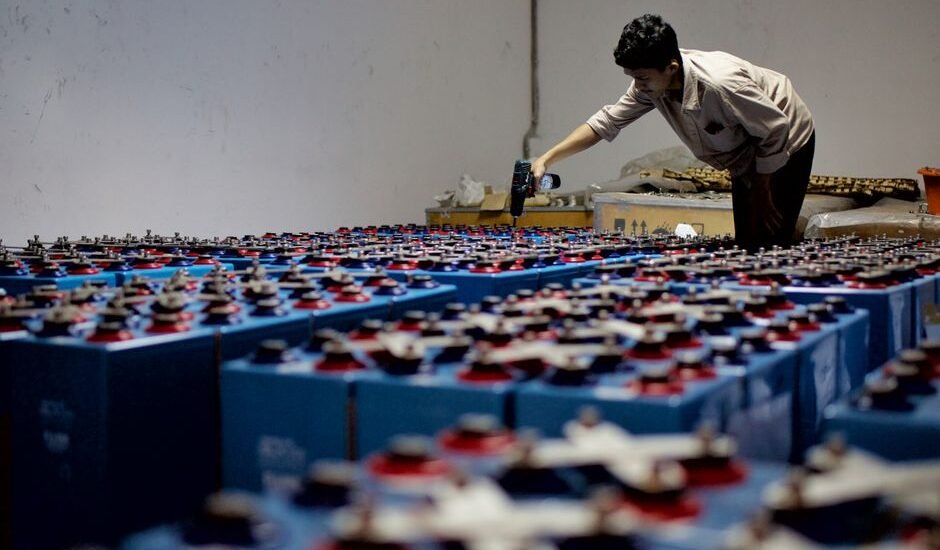
| Flooded Lead-Acid Bank | 1.15–1.25 | Flooded Lead-Acid | 50–60% | Monthly water top-up |
| Sealed AGM/Lead-Acid Bank | 1.10–1.20 | AGM/Sealed Lead-Acid | 60–80% | Low, no water needed |
| LiFePO4 Lithium Bank | 1.04–1.08 | Lithium Iron Phosphate | 95–99% | None |
| Gel Lead-Acid Bank | 1.10–1.15 | Gel Lead-Acid | 70–80% | Low, no water needed |
Choose the right charge efficiency for your off-grid setup
The charge efficiency factor (sometimes called charge factor or charging efficiency) tells you how much energy is lost as heat or gas during charging, instead of being stored in the battery. For example, a factor of 1.20 means you must supply 20% more amp-hours than you actually store. This number is crucial when sizing solar panels, because undershooting it leaves you with less usable energy day after day.
Flooded lead-acid batteries are the least efficient, with charge efficiency factors often between 1.15 and 1.25. These banks lose energy to heat and gassing, especially in the final phase of charging. Sealed AGM and gel batteries are a bit better, usually 1.10–1.20. Modern lithium iron phosphate (LiFePO4) batteries are far more efficient, with charge efficiency factors as low as 1.04. That means only 4% of charging energy is lost—making them easier to keep full with a smaller solar array.
When planning your system, always use the correct factor for your battery type. For example, to replace 100Ah of actual use from a flooded lead-acid bank, you must supply 115–125Ah of charge. For LiFePO4, you’d only need 104–108Ah. This difference can drive thousands of dollars in extra panels or fuel over years of off-grid use.
See today’s deals
Quick decision tree
- If minimizing upfront cost: Flooded lead-acid banks are cheapest, but require more solar/generator capacity due to lower efficiency.
- If you want low maintenance: Sealed AGM or gel batteries offer moderate efficiency with no water checks.
- If maximizing usable energy or have limited solar space: LiFePO4 lithium banks provide the highest charge efficiency and usable capacity.
- If you’re running heavy loads daily: Lithium banks handle deep discharges and fast charging better, with less energy lost.
- If you’re replacing an old bank: Match your charge controller’s settings and sizing calculations to your new battery’s charge efficiency factor.
Calculate your real solar needs with charge efficiency factor
Most off-grid sizing calculators ask for your battery bank size and daily power use, but many skip the charge efficiency factor. Always add it in yourself, or you’ll come up short. Here’s a practical example:
- You use 80Ah per day from your battery bank.
- Your bank is flooded lead-acid (charge efficiency 1.20).
- You need to replace 80Ah × 1.20 = 96Ah per day with your solar or generator—not just 80Ah.
- If your bank is lithium (charge efficiency 1.05), 80Ah × 1.05 = 84Ah per day—saving you 12Ah daily, which adds up fast.
When sizing solar arrays, multiply your daily amp-hour use by your battery’s charge efficiency factor. This gives you the minimum charge needed to fully replace what you use, accounting for battery losses. Add solar panel losses and weather margin on top for real-world performance.
Why does charge efficiency factor matter for generators and alternators?
Charge efficiency isn’t just a solar concern. If you’re relying on a generator or your vehicle’s alternator to top up batteries, a low charge efficiency factor means longer run times, more fuel, and more wear. For example, charging a 200Ah AGM bank from 50% to full with a generator and a factor of 1.15 means you’ll need to supply 115Ah—not just 100Ah. Over a winter season, that’s a lot of extra fuel and engine hours. Lithium banks, with their higher efficiency, reach full charge much faster—saving time and fuel.
Some alternators and portable generators can’t supply enough current to overcome the inefficiency of large lead-acid banks, especially during the absorption phase. Check your charging source’s output and your battery’s efficiency to avoid painfully long generator run times.
Stop the most common sizing mistake: Ignoring charge efficiency
Many off-grid beginners size their solar based on battery “nameplate” capacity, not realizing only a fraction of charging energy actually gets stored—especially with lead-acid. This mistake leads to chronic undercharging, sulfation, and short battery life. Always factor in charge efficiency when calculating daily charging needs and total solar array size.
For a deep dive on battery charging principles, see the Battery University knowledge base, which provides detailed breakdowns by chemistry and use case.
View what’s available
Related Guides
- 12V Solar Charge Controller Circuit Diagram Explained
- How to Choose the Right Solar Charge Controller for Lithium Batteries
- How to Use a Solar Charge Controller: Step-by-Step Instructions
- MPPT vs PWM Charge Controllers: What’s the Real Difference?
- What Does a Solar Charge Controller Do? Key Functions Explained
- Why Do Charge Controllers Need Temperature Compensation?
- Browse all Charge Controllers →
How to check a battery’s real charge efficiency factor
Manufacturers rarely print the charge efficiency factor on the marketing sheet. Look for it in the technical manual, or ask the supplier for the “coulombic efficiency” or “charging efficiency” rating. For lead-acid, expect 75–85% efficiency (factor 1.15–1.25). For lithium iron phosphate, 92–96% (factor 1.04–1.09). If you see only “round-trip efficiency,” remember this includes both charging and discharge losses—a separate but related number.
When in doubt, use conservative numbers: 1.20 for flooded lead-acid, 1.15 for AGM/gel, 1.05 for lithium. It’s better to oversize your charging sources than to run short on power.
FAQs about charge efficiency factor for off-grid batteries
How much extra solar do I need for a flooded lead-acid bank?
For every 100Ah you use from a flooded lead-acid bank, you need to supply 115–125Ah to fully recharge it. Multiply your daily use by 1.20 (or your battery’s published factor) to determine the minimum solar output required. This does not include inverter or wiring losses—add those on top.
What’s the difference between charge efficiency and round-trip efficiency?
Charge efficiency refers only to energy lost during the charging process. Round-trip efficiency includes losses during both charging and discharge. Lithium batteries typically reach 90–96% round-trip efficiency, while lead-acid banks are often 70–80%. For off-grid sizing, always use the charge efficiency factor to size your charging sources.
How does charge efficiency factor affect generator run time?
A lower charge efficiency factor means your generator must run longer to fully charge the batteries. For example, a 1.20 factor means 20% more fuel and run time compared to a 1.05 lithium bank. Over a season, this can add up to dozens of extra hours and gallons of fuel.
Which battery type is best if I have limited solar roof space?
LiFePO4 lithium batteries offer the highest charge efficiency (1.04–1.08) and nearly full usable capacity. This makes them ideal for small roof spaces, van conversions, or tiny homes where every watt counts. They cost more up front, but allow for a smaller solar array and faster charging.
Does charge efficiency factor change as batteries age?
Yes, especially with lead-acid banks. As batteries age and sulfate, their charge efficiency drops—meaning you’ll lose more energy to heat and gassing. Lithium batteries maintain high efficiency for most of their lifespan. Always check efficiency if your bank is more than two years old.
Can I mix batteries with different charge efficiency factors?
Mixing battery types is not recommended. Different chemistries charge at different rates and have different efficiency losses, leading to imbalanced charging and shorter lifespan for one or both banks. Stick to one chemistry and type per bank for best results.
How do I know if my solar setup is underperforming due to low charge efficiency?
If your batteries never seem to reach full charge or you notice declining capacity despite sunny days, it could be due to underestimated charge efficiency. Measure your daily amp-hour input and compare it to your actual use. If you’re not multiplying your use by the correct factor, you’re likely undercharging.
What next? Use charge efficiency factor to plan your off-grid upgrade
Whether you’re upgrading batteries, adding solar panels, or planning a new off-grid system, the charge efficiency factor is a critical number for reliable, cost-effective power. Always use the right factor for your battery chemistry, and don’t trust “rule of thumb” values from generic calculators. For deeper technical standards, the Battery Council International offers extensive resources on battery design and performance.
Take the time to get this right. Your batteries—and your wallet—will thank you every season you stay off the grid with full power.
Last updated: June 2026 · How we cover this topic