9 min read
Disclosure: As an Amazon Associate and eBay Partner Network publisher, we earn from qualifying purchases. This doesn’t affect what we recommend or how we describe it.
Most solar system guides push you to buy the biggest, most expensive combiner box you can afford. But that’s not always the smartest move—oversizing adds cost and complexity, while undersizing risks safety and performance. The real decision comes down to how many panel “strings” you need to combine, your system’s voltage and amperage, and where you’ll mount the box. Two VEVOR models dominate the current market: one built for larger, steel-cased installs, and a more compact, budget ABS unit. Each has clear trade-offs. Here’s how to pick the right fit for your off-grid, RV, or home solar setup.
Top picks at a glance
- VEVOR Solar PV Combiner Box 6 String 10A for Solar Panel System Steel Case IP65 — the best-known brand option
- VEVOR Solar PV Combiner Box 4 String 15A for Solar Panel System ABS Case IP65 — the most compact VEVOR choice
Comparing the top solar combiner boxes for 2024

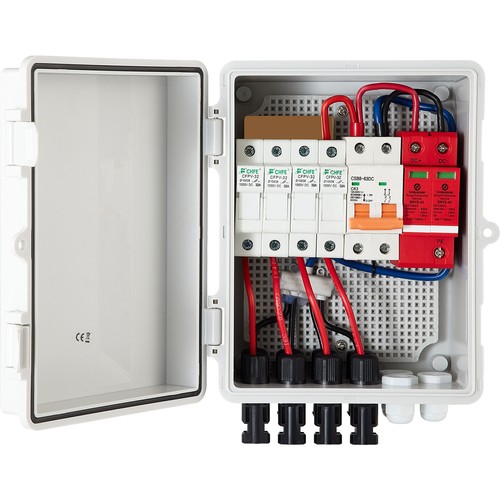
Pictured: VEVOR 6 String Steel
| Product | Condition | Price | Best For | Max Strings | Max String Current | Enclosure Material |
|---|---|---|---|---|---|---|
| VEVOR Solar PV Combiner Box 6 String 10A for Solar Panel System Steel Case IP65 |
New | $$$ | Best-known brand option | 6 | 10A | Steel |
 VEVOR Solar PV Combiner Box 4 String 15A for Solar Panel System ABS Case IP65 VEVOR Solar PV Combiner Box 4 String 15A for Solar Panel System ABS Case IP65 |
New | $ | Most compact VEVOR choice | 4 | 15A | ABS |
$ / $$ / $$$ indicates budget / mid-range / premium relative to the picks above. Check live listings further down for current prices.
Why string count and amperage matter most
The biggest mistake buyers make is ignoring how many solar panel strings they actually need to combine. The VEVOR Solar PV Combiner Box 6 String 10A for Solar Panel System Steel Case IP65 is built for up to six strings, each handling up to 10 amps. This suits larger off-grid arrays, small home systems, or anyone planning to expand later. If you’re wiring more than four strings, or want maximum flexibility, the VEVOR 6 String Steel is the clear pick.
The VEVOR Solar PV Combiner Box 4 String 15A for Solar Panel System ABS Case IP65 covers smaller setups—think RVs, van conversions, or cabins with up to four panel strings. Each string can handle up to 15 amps, which means it can safely combine higher-output panels per input than the six-string model. If your system is compact or you’re running high-current panels in parallel, the VEVOR 4 String ABS is the stronger match.
Enclosure material: steel vs ABS in real-world conditions
Box material matters for both safety and longevity. The VEVOR 6 String Steel uses a steel enclosure with IP65 weatherproofing. Steel offers better impact resistance and is less likely to warp in direct sun or extreme cold. For permanent outdoor mounting—especially on a home, barn, or exposed ground rack—steel is the safer long-term bet.
The VEVOR 4 String ABS relies on a plastic (ABS) enclosure, also rated IP65. ABS is lighter and easier to mount in tight spaces, like inside RV battery compartments or under van seats. However, plastic can degrade faster if exposed to UV light or physical abuse. For portable, semi-permanent, or interior installs, ABS saves weight and cost without major drawbacks.
If you’re unsure what IP65 means, it’s a standard indicating the box is dust-tight and protected against water jets. For more on IP ratings and solar safety standards, see the National Fire Protection Association guidelines for PV system components.
Who should choose the steel-cased 6-string VEVOR?
Pick the VEVOR 6 String Steel if you’re building a system with five or six panel strings, want the extra headroom for future expansion, or need a rugged, tamper-resistant enclosure. This is the right match for ground-mount arrays, outbuildings, or any install where wildlife, weather, or accidental bumps are a concern. The 10A per string limit means it’s best suited to standard residential panels (most are under 10A per string at 12V/24V) or cases where you’re wiring more strings at lower current.
When the 4-string ABS VEVOR is the better fit
The VEVOR 4 String ABS shines for small systems and mobile installs. If you’re combining up to four strings—especially with higher-current panels (up to 15A per string)—this box gives you a compact, affordable solution. Its lightweight ABS case is easier to mount in RVs, vans, or on lightweight wall panels. Just be sure to keep it out of direct sun and avoid heavy impacts to get the longest life from the enclosure.
Related Guides
- Off-Grid vs Grid-Tie Inverters: Which Is Right for Your Solar Setup?
- Solar Generators vs Gas Generators: Which Is Best Off-Grid?
- How to Buy a Solar Generator: A Practical Guide for Beginners
- How to Choose the Right Solar Charge Controller for Lithium Batteries
- Our guide to How to Choose the Right Solar Panel Tilt Mount for Your RV
- Our guide to How to Test Solar Panel Output: A Practical Guide
- Browse all Solar Panels Kits →
Beginner’s pre-purchase checklist
- Count your solar panel strings—how many positive and negative wire pairs will enter the box?
- Check the maximum current your panels produce per string (look for “Isc” or “Imp” on the panel label) and match to the box input limit (10A or 15A).
- Measure the available mounting space—note enclosure dimensions and allow clearance for wire entry and lid opening.
- Confirm your system voltage (12V, 24V, 48V) is supported by the combiner box’s rated insulation and breakers.
- Decide if you need DC fusing or surge protection—some boxes come pre-fused, others require separate purchase.
- Plan cable entry—determine if you need extra cable glands or adapters for your wire size and jacket type.
- Assess the installation environment—outdoor, indoor, or vehicle—and choose steel or ABS for best durability.
How these solar combiner boxes made the shortlist
The selection process focused on real-world needs for off-grid, RV, and home solar users. Key criteria included string count (4 vs 6), maximum input current (10A or 15A per string), enclosure material (steel for durability, ABS for lightness), and weatherproof rating (IP65 minimum). Only models with clearly listed specs and brand reputation were considered. We compared the manufacturer specs and stated features of each option, weighing their suitability for typical off-grid scenarios.
Unbranded or generic combiner boxes with missing specs, unclear amperage ratings, or no IP certification were excluded. Listings bundled with panels or inverters—where the combiner box details were unclear—were also left out to avoid confusion. This guide is for buyers who want a dedicated combiner box with known specs, not for those looking for an all-in-one kit or custom project solution. If you only have one or two panels, or your inverter already includes integrated combiner inputs, you can skip a standalone box entirely.
Frequently asked questions about solar combiner boxes
Can I use a 6-string combiner box with just three panel strings?
Yes, you can use the VEVOR 6 String Steel with fewer than six strings. Any unused inputs can remain capped and sealed. This gives you room to expand your array later without replacing the box.
How does enclosure material affect safety and lifespan?
Steel enclosures like the VEVOR 6 String Steel resist impacts and UV better than ABS plastic. For outdoor or exposed installs, steel generally lasts longer. ABS enclosures—like the VEVOR 4 String ABS—are fine for protected or interior mounting, but should be kept out of direct sunlight for best longevity.
Is it worth paying more for the steel-cased 6-string VEVOR over the 4-string ABS model?
The steel model costs more, but it’s justified if you need the extra string capacity, want maximum durability, or plan to expand your system. If your system is limited to four strings and you don’t need the toughness of steel, the ABS model saves money and space.
What size wires fit these combiner boxes?
Both VEVOR models typically accommodate up to 10 AWG or 8 AWG solar wire per input, but always check the listing or user manual for the exact cable gland and terminal size. Oversized wires may require adapters or modification—not recommended for safety reasons.
Are these combiner boxes compatible with 48V solar systems?
Both boxes are listed for generic “solar panel systems,” but you must confirm the voltage rating of the included breakers or fuses. Many combiner boxes are rated up to 1000V DC, but always verify in the product specs. Never exceed the manufacturer’s stated limits.
How long should a combiner box last in daily use?
A steel combiner box, properly installed and weather-sealed, can last 10-20 years outdoors. ABS boxes last 5-10 years if protected from sun and impact. Regularly check the seals and terminals for corrosion to maximize lifespan.
VEVOR 6 String Steel vs VEVOR 4 String ABS—what’s better for an RV or van conversion?
The VEVOR 4 String ABS is generally a better fit for RVs and vans due to its compact size, lighter weight, and higher per-string current rating. The steel 6-string is overkill unless you plan a very large mobile array or want maximum physical protection.
What if my panels output more than 10A or 15A per string?
If your panel string’s current exceeds the box’s input limit (10A or 15A), you risk overheating and voiding warranties. You’ll need to split the panels into more strings or use a higher-rated combiner box. Never exceed the stated input current per string.
Do these VEVOR combiner boxes include fuses or surge protection?
Many VEVOR combiner boxes come with integrated DC fuses or breakers, but always check the product listing. If not included, you must add appropriately rated fuses or breakers for code compliance and safety.
Are returns or warranty support available for these models?
Return and warranty policies depend on the seller and marketplace. VEVOR typically offers a limited warranty on new products, but always confirm the details before buying. Keep your purchase receipt and check the seller’s return window for peace of mind.
The bottom line: string count, amperage, and material make the difference
Choosing the best solar combiner box isn’t about picking the biggest or cheapest—it’s about matching string count, amperage, and enclosure to your real-world needs. The VEVOR 6 String Steel is the right call for larger or permanent installs where future expansion and durability matter most. The VEVOR 4 String ABS is perfect for compact, high-current, or mobile systems where space and weight are at a premium. Always size for your current and future needs, and never exceed the manufacturer’s specs. For more technical background on solar system safety and design, check out the National Renewable Energy Laboratory for up-to-date industry guidance.
Ready to see the latest prices and availability? Browse top-rated solar combiner boxes now.
Last updated: June 2026 · Our research process