6 min read
Disclosure: As an Amazon Associate and eBay Partner Network publisher, we earn from qualifying purchases. This doesn’t affect what we recommend or how we describe it.
Individual lithium battery cells in an off-grid power bank can drift apart by as much as 0.2V or more per cell over a year of use—enough to shorten battery life, cause inverter shutdowns, or even create safety risks. Balancing cells is the key to preventing these headaches, especially in DIY battery builds or when running LiFePO4 batteries in demanding off-grid setups. Knowing how to balance battery cells, and which tools actually work, will save you from expensive replacements and frustrating troubleshooting down the road.
Cell balancing options compared: manual, passive, active, and BMS-integrated
| Approach | How It Works | Typical Balance Current | Ease of Use | Best For |
|---|---|---|---|---|
| Manual Top-Balancing | Bring all cells to the same voltage using a bench power supply or resistors, one by one. | 0.5–2A | Hands-on, slow | Initial DIY battery assembly |
| Passive Balancer Board | Shunts excess charge from high cells as heat once a threshold is reached. | 30–100mA | Set-and-forget | Budget off-grid banks |
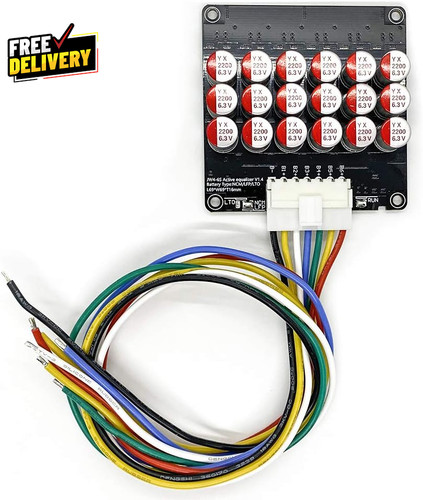
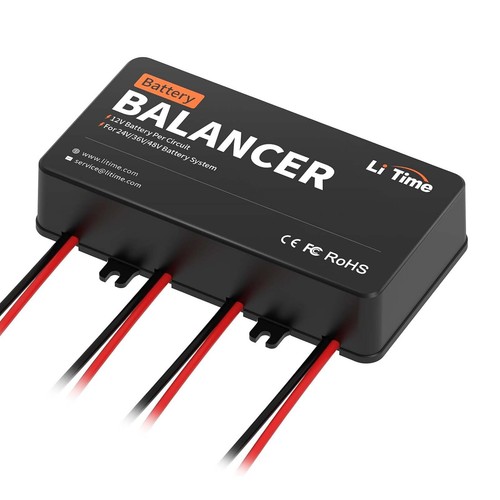
| Active Balancer Board | Moves charge from high to low cells using inductors or capacitors. | 0.5–5A | Plug-and-play | High-capacity or frequently cycled batteries |
| BMS with Integrated Balancing | Combines cell monitoring, protection, and balancing in one unit. | 30–100mA | Automatic | Most prebuilt batteries |
What most buying guides get wrong about cell balancing
Most advice glosses over balance current. This single number determines how quickly your system can correct cell drift. For example, a passive board with only 30mA of balance current might take days to equalize a 0.1V difference in a 100Ah cell bank. That’s fine for maintenance but not for correcting major imbalances after a deep discharge.
Another overlooked point: some cheaper BMS units claim “balancing” but only activate at voltages higher than you’ll ever reach in normal use—rendering them useless for regular off-grid cycling. Always check the data sheet for both the balance current and the voltage threshold at which balancing kicks in (look for 3.4–3.6V/cell for LiFePO4).
Compare optionsHow to balance battery cells: step-by-step for off-grid users
- Measure individual cell voltages. Use a multimeter with 0.01V resolution. Record each cell’s voltage to spot which are high or low.
- Decide on your balancing method. For initial setup, manual top-balancing with a bench power supply is most accurate. For ongoing use, ensure you have a BMS or balancer board wired in.
- For manual top-balancing, charge all cells in parallel. Set your power supply to the upper voltage limit for your chemistry (e.g., 3.65V for LiFePO4) and allow all cells to reach the same voltage. This may take several hours for large cells.
- Reconnect cells in series and install your balancing device. Double-check connections, then power on the system and monitor cell voltages during a full charge/discharge cycle.
- Monitor and repeat as needed. If cell voltages drift by more than 0.05V during use, investigate whether your balancer’s current is sufficient or consider upgrading to an active balancer.
Red flags in listings to walk past
- No stated balance current: If a balancer or BMS listing doesn’t mention a numeric balance current (in mA or A), you’re likely looking at a token feature, not a real solution.
- “Universal” voltage claims: Products that claim to work for all lithium chemistries without specifying cut-off voltages often don’t match LiFePO4 or LFP requirements.
- Missing voltage threshold info: If the listing doesn’t say when balancing activates (e.g., 3.45V/cell), you can’t know if it will help in your setup.
- Photos only show one side: Sellers who don’t show both sides of a balancer PCB may be hiding low-quality, incomplete, or even fake boards.
- Overly vague warranty: A “30-day guarantee” on something installed deep in your battery pack is a sign the seller doesn’t stand behind the product long-term.
The spec almost nobody talks about: balance current vs. battery size
Matching your balancer’s current to your battery’s capacity is critical. For a 280Ah LiFePO4 bank, a balancer with only 60mA current can take over 24 hours to correct a 0.1V difference between cells—a big problem if your system cycles daily. For banks over 200Ah, look for active balancers rated at 1–5A balance current. For smaller banks (under 100Ah), a 60–100mA passive balancer is usually adequate for maintenance.
Note that balancing is not a substitute for proper cell matching during assembly. Even the best balancer can’t fix cells with wildly different capacities or internal resistance. Always start with cells from the same batch and similar cycle counts.
View what’s availableRelated Guides
- How to Balance a Battery Bank: Step-by-Step Guide for Beginners
- Our guide to How to Balance a Lithium Battery Pack: A Step-by-Step Guide
- Choosing the Best Deep Cycle Battery for Off-Grid Power
- Our guide to Battery Monitors, Reviewed for Reliable Off-Grid Power
- Our guide to Portable Battery Boxes for Off-Grid Power
- Our guide to Solar Battery Maintainers for Reliable Off-Grid Power
- Browse all Deep Cycle Batteries →
FAQs: real-world cell balancing for off-grid users
How often should I balance my battery cells?
For typical off-grid use, check cell voltages every 1–3 months. If your balancer is working well and voltages stay within 0.03–0.05V, manual intervention is rarely needed. After hard use or deep cycles, check more often.
Manual top-balancing vs. active balancer—which is better?
Manual top-balancing is best for initial assembly, ensuring all cells start at the same voltage. Active balancers are superior for large or frequently cycled banks, as they quickly correct drift during normal use. For most, a combination works best: top-balance at the start, then rely on an active balancer or BMS for maintenance.
What happens if I skip cell balancing?
Skipping balancing can lead to one cell overcharging or over-discharging before the others. This shortens battery life and can trigger BMS shutoffs or, in rare cases, cause cell venting or fire. Consistent balancing prevents these risks.
How long does it take to balance a 100Ah battery bank?
With a 60mA passive balancer, correcting a 0.05V imbalance in a 100Ah bank can take 10–20 hours. An active balancer with 1A current can do the same job in under an hour. Large imbalances always require more time or higher balancing current.
Is a BMS with built-in balancer enough for daily off-grid cycling?
For most home or RV systems under 100Ah, a BMS with 60–100mA balancing current is adequate for maintenance. For larger banks, or if you see persistent drift, add a dedicated active balancer rated for your battery size.
How do I know if my cells are matched well enough for balancing to work?
After a full charge and discharge cycle, if all cell voltages stay within 0.05V, your cells are well-matched. If one cell is always high or low, even after balancing, it may be a sign of a defective or mismatched cell that needs replacement.
What’s the warranty risk with cheap balancer boards?
Many low-cost balancer boards offer only 30–90 days of coverage, which is not enough for a component buried in a battery box. Stick to sellers with at least a 1-year warranty and clear return policies. Always test new boards before final installation.
Where to find trustworthy technical advice
For in-depth technical standards, the UL certification site provides guidance on battery safety and the requirements for battery management systems. For practical off-grid system design, the Northern Arizona Wind & Sun knowledge base is a solid resource for real-world Q&A from experienced installers.


Last updated: July 2026 · How we put guides together