
9 min read
Disclosure: As an Amazon Associate and eBay Partner Network publisher, we earn from qualifying purchases. This doesn’t affect what we recommend or how we describe it.
Reliable state-of-charge tracking is the difference between a stress-free off-grid trip and a dead battery in the middle of nowhere. Bluetooth battery monitors have become the go-to solution for anyone serious about maximizing lithium battery life and catching issues before they turn into big problems. But with so many lookalike models and confusing specs, choosing the best lithium battery bluetooth monitor isn’t as simple as it sounds. This guide breaks down three of the most reliable lithium battery Bluetooth monitors available today, focusing on real differences that matter for off-grid, RV, and solar users.
Top picks at a glance
- Victron SmartShunt 300A IP65 Bluetooth Battery Monitor — the most trusted and feature-rich option
- Renogy BT-2 Bluetooth Module — best for Renogy system integration
- LiTime 500A Smart Bluetooth Shunt Battery Monitor — the heavy-duty high-current pick
Spec surprises: What actually sets these Bluetooth monitors apart?
Most buyers assume all Bluetooth battery monitors do the same thing: show voltage and maybe state of charge. In reality, the differences between models—like shunt amp ratings, app features, and system integration—can make or break your setup, especially if you run high loads or use brand-specific gear. Here’s how the current top picks stack up.
Comparison table: Lithium battery Bluetooth monitors head-to-head

Pictured: Victron SmartShunt
| Product | Condition | Price | Best For | Max Current (Shunt) | Integration/Compatibility |
|---|---|---|---|---|---|
| Victron SmartShunt 300A IP65 Bluetooth Battery Monitor |
New | $$ | Most trusted, feature-rich | 300A | Universal, Victron ecosystem |
 Renogy BT-2 Bluetooth Module Renogy BT-2 Bluetooth Module |
New | $ | Renogy system integration | — | Renogy products only |
 LiTime 500A Smart Bluetooth Shunt Battery Monitor LiTime 500A Smart Bluetooth Shunt Battery Monitor |
New | $$$ | Heavy-duty, high-current | 500A | Universal |
Pricing context: $, $$, and $$$ are relative ratings against the other products listed above, not absolute dollar ranges. Live current prices follow below.
Pricing context: $, $$, and $$$ are relative ratings against the other products listed above, not absolute dollar ranges. Live current prices follow below.
Why the Victron SmartShunt is the gold standard for most users
The Victron SmartShunt 300A IP65 Bluetooth Battery Monitor stands out for its combination of reliability, detailed data, and flexibility. Rated for up to 300A, it’s sized right for most off-grid home and van/RV systems—enough headroom to cover typical inverter loads and surge currents without risk of overload. The Victron Bluetooth app (VictronConnect) gives you granular data: real-time current (to 0.01A), voltage, amp-hours used, and even historical stats. Setup is nearly plug-and-play for most 12V/24V/48V lithium systems, and it works with any battery brand, not just Victron. If you want advanced features like remote monitoring, integration with other Victron gear, or precise state-of-charge tracking, this is the most robust pick. The IP65 rating also means it stands up to dust and water spray—useful for harsh van, boat, or outdoor installs.
Where the Renogy BT-2 makes sense—and where it falls short
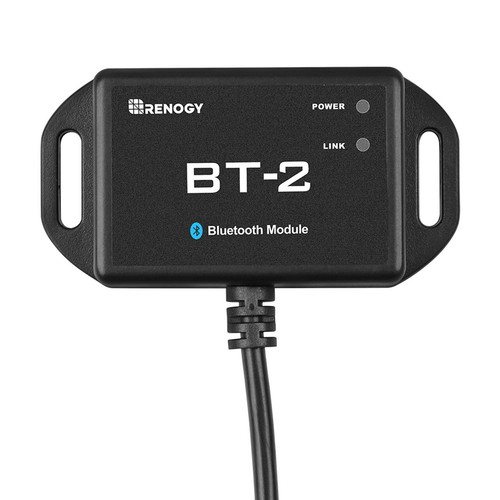
The Renogy BT-2 Bluetooth Module is purpose-built for Renogy battery and charge controller users. It’s not a standalone battery monitor; instead, it acts as a wireless bridge to let you view data from compatible Renogy devices on your phone. This is the budget option, but it’s only worth considering if you’re already invested in the Renogy ecosystem. The BT-2 doesn’t provide shunt-based current measurement—the depth of data depends entirely on what your Renogy battery or controller reports. If you need universal compatibility, shunt-based current tracking, or plan to mix brands, this module is too limited. But for Renogy owners who want a simple, low-cost way to add Bluetooth monitoring, it’s a plug-and-play solution.
LiTime 500A Smart Shunt: When you need serious current capacity
For large off-grid systems, high-inverter RVs, or situations where you routinely pull over 200A (think: big air conditioners, welders, or multiple appliances), the LiTime 500A Smart Bluetooth Shunt Battery Monitor is the heavy-duty pick. Its 500A shunt rating gives you headroom for serious current draw—few residential or van setups will ever max this out. The LiTime app provides real-time current, voltage, and state of charge metrics, with a clear focus on users who need to monitor large battery banks or parallel battery setups. If you’re running a power-hungry off-grid cabin or want to future-proof for system expansion, this is the option with the most overhead. The trade-off is price: you’ll pay more for this level of capacity, and most smaller systems don’t need it.
Related Guides
- How to Balance a Lithium Battery Pack: A Step-by-Step Guide
- Choosing the Right Lithium Battery Heater: What Actually Works
- Our guide to Gel Batteries vs Lithium Batteries: Which Is Better for Off-Grid Power?
- Lead Crystal vs Lithium-Ion Batteries: Which Is Better for Off-Grid Power?
- Our guide to Lithium Batteries vs Supercapacitors: Which Is Better for Off-Grid Power?
- Our guide to Lithium Iron Phosphate vs AGM Batteries: Which Is Right for Off-Grid Use?
- Browse all Deep Cycle Batteries →
What most buying guides get wrong about Bluetooth battery monitors
It’s easy to overlook compatibility and shunt rating, but those are the two specs that trip up most buyers. Bluetooth range is rarely a bottleneck—most apps work reliably within 10–15 meters—but a shunt that’s too small can overheat or fail. And if you buy a monitor that only works with its own brand (like the Renogy BT-2), you’re locked out of using it with other batteries or chargers. For lithium batteries, accuracy and reliable state-of-charge calculation matter far more than for old-school lead-acid setups. Choose a monitor that matches your max inverter load, and don’t assume every Bluetooth module gives you the same depth of data.
How we picked these Bluetooth lithium battery monitors
This shortlist is based on research into manufacturer specs, listed features, and market positioning. Key criteria included shunt amp rating (for safe use with high-current lithium systems), Bluetooth app functionality (including real-time current, voltage, and state-of-charge reporting), integration with major battery brands, and environmental durability (like IP ratings for dust/water). Models were only included if they’re currently available, name-brand, and have clear compatibility with lithium batteries.
We excluded no-name shunt modules with unclear specs, any monitor lacking Bluetooth, and bundles that bury the monitor in a kit of unrelated gear. If you’re using only lead-acid batteries or never exceed 50A draw, a basic voltage meter or panel display may be a better fit—these Bluetooth models are best for users who want detailed data, remote monitoring, or future system upgrades.
For a technical deep dive into battery monitoring, see Victron Energy’s resource hub — their guides explain why state-of-charge measurement is more complex for lithium chemistries than for older battery types.
Common mistakes to avoid
- Undersizing the shunt: Choosing a 100A or 200A shunt for a system with a 2000W inverter (which can draw 160A+) risks overheating and inaccurate readings—always match your shunt to your system’s peak current.
- Ignoring brand lock-in: Picking a brand-specific Bluetooth module (like the Renogy BT-2) when you use mixed-brand gear means you’ll miss out on key data and flexibility.
- Assuming all Bluetooth apps are equal: Some apps only show voltage, while others offer amp-hour tracking and historical charts—read app reviews and screenshots before buying.
- Skipping environmental ratings: Installing a monitor without checking for IP ratings can lead to water damage in vans, boats, or damp locations—IP65 is the minimum for outdoor or mobile installs.
- Overpaying for unused capacity: Buying a 500A shunt for a 50A system adds cost and bulk without real benefit—size your monitor for your actual needs, not just future “what ifs.”
FAQ: Real-world questions about lithium battery Bluetooth monitors
How accurate are Bluetooth battery monitors for lithium batteries?
Accuracy depends on the quality of the shunt and the software’s ability to track amp-hours in and out. Models like the Victron SmartShunt can display current to 0.01A increments, which is more than precise enough for most users. Lithium batteries require more accurate monitoring than lead-acid, since voltage alone isn’t a reliable indicator of state-of-charge.
Is the LiTime 500A Smart Shunt worth the price over the Victron SmartShunt?
The LiTime 500A Smart Shunt costs more because of its higher current rating. It’s only worth the extra investment if your system regularly draws over 250A or you plan to expand significantly. For most van, RV, or small home setups, the 300A Victron model is sufficient and more cost-effective.
Will the Renogy BT-2 work with other brands of batteries or monitors?
No, the Renogy BT-2 is designed specifically for Renogy batteries and controllers. It connects via a proprietary port and cannot be used as a universal battery monitor or with generic shunt modules. If you mix brands, look for a universal option like the Victron or LiTime models.
What is the typical Bluetooth range for these monitors?
Most Bluetooth battery monitors have a reliable range of 10–15 meters (about 30–50 feet) in open space. Walls, metal enclosures, and interference can reduce this. For most RV, van, or small cabin setups, this range is sufficient to monitor from anywhere inside.
How long do these monitors last under daily use?
With no moving parts, a quality Bluetooth battery monitor can last 5–10 years if installed properly. Environmental factors like moisture, vibration, and improper wiring can shorten lifespan. Look for IP ratings (like IP65) and check manufacturer warranty terms for specifics.
Victron SmartShunt vs LiTime 500A Smart Shunt—Which is better for a high-power inverter (3000W+)?
A 3000W inverter at 12V can pull 250A or more at full load. The LiTime 500A Smart Shunt is the safer choice for this level of current, as it offers more headroom and lower risk of overheating. The Victron SmartShunt is ideal for mid-size systems up to about 300A continuous, but for very large loads, go with the LiTime.
Do I need a Bluetooth battery monitor, or is a panel voltmeter enough?
For lithium batteries, a Bluetooth monitor with a shunt gives you state-of-charge, current, and amp-hour tracking that a simple voltmeter can’t provide. This is especially important for users who want to avoid deep discharges and maximize battery lifespan. If you only need to check voltage, a basic panel meter will suffice, but you lose out on detailed insights and remote monitoring.
For more information on battery safety and system design, see the RVDA’s technical resources—they offer unbiased guides for both beginners and advanced users.
Related Guides
- How to Balance a Lithium Battery Pack: A Step-by-Step Guide
- Choosing the Right Lithium Battery Heater: What Actually Works
- Our guide to Gel Batteries vs Lithium Batteries: Which Is Better for Off-Grid Power?
- Lead Crystal vs Lithium-Ion Batteries: Which Is Better for Off-Grid Power?
- Our guide to Lithium Batteries vs Supercapacitors: Which Is Better for Off-Grid Power?
- Our guide to Lithium Iron Phosphate vs AGM Batteries: Which Is Right for Off-Grid Use?
- Browse all Deep Cycle Batteries →



Last updated: July 2026 · Our research process