7 min read
Plug a watt meter between your appliance and the outlet to see exactly how much power it draws. This is the fastest and most accurate way to check appliance power consumption for anyone building or troubleshooting an off-grid system. Understanding how much electricity your devices actually use is the foundation for sizing solar, batteries, and inverters that keep your setup running reliably—without overspending or getting stranded with dead gear. This guide walks you through practical methods, essential gear, and real-world tips for checking appliance power draw, even if you’ve never done it before.
Comparing appliance power measurement approaches
| Approach | Measurement Range | Accuracy | Ease of Use | Key Limitation |
|---|---|---|---|---|
| Plug-in watt meter | 1–1800W (AC only) | ±1–2% | Very simple | Only works on plug-in AC appliances |
| Clamp-on multimeter | 0.1–400A (AC/DC) | ±2–3% | Intermediate | Requires wire access and setup |
| Smart plug with monitoring | 1–1800W (AC only) | ±3–4% | Easy, app-based | Needs Wi-Fi and app; AC only |
| Manual spec label calculation | — | Varies (±10–20%) | Basic | Estimates only; not real-time |
Step-by-step: How to check appliance power consumption
- Identify the appliance type
Determine if the appliance is AC (standard wall plug) or DC (runs off batteries). This affects what measurement tools you can use. - Choose the right measurement tool
For plug-in AC appliances, a plug-in watt meter is easiest. For hardwired or DC appliances, use a clamp-on multimeter. For smart-home users, a smart plug with monitoring may be an option. - Connect the tool
Plug the watt meter or smart plug into the outlet, then plug your appliance into the meter. For clamp meters, open the panel and clamp around one wire (never both at once), following all safety guidelines. - Turn on and operate the appliance
Run the appliance as you normally would. For devices with variable settings (like a blender or microwave), test at different power levels if needed. - Read and record the numbers
Note the wattage (W) or current (A) shown. If using a clamp meter, multiply amps by voltage (e.g. A × 120V for AC) to get watts. For devices that cycle on/off (like fridges), watch for a few minutes to get average and peak readings. - Repeat for all key appliances
Test each device you plan to use off-grid. Write down the results for later system sizing.
Plug-in watt meters: Fastest way for most users
Plug-in watt meters are the go-to for most off-grid and RV setups. You simply plug the meter into a standard AC outlet, then plug your appliance into the meter. It instantly displays wattage, volts, amps, and sometimes kilowatt-hours (kWh) for energy tracking over time. Most meters handle loads up to 1800W—enough for fridges, microwaves, or power tools. Expect accuracy within 1–2%. They’re safe, cheap, and don’t require opening any panels or handling bare wires. See today’s deals
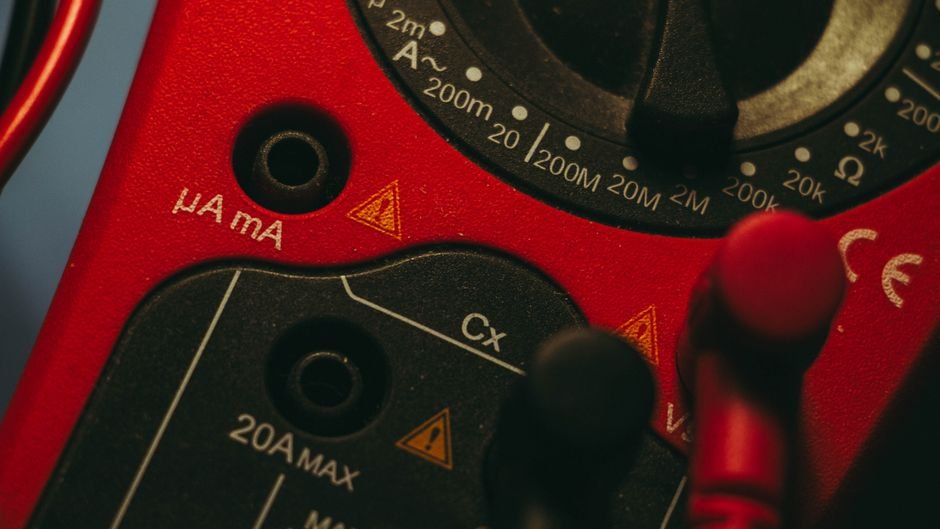
Clamp-on multimeters: For DC and hardwired appliances
For 12V or 24V DC appliances, or anything that’s hardwired (like a built-in water pump or inverter), a clamp-on multimeter is essential. These meters measure current by clamping around a single wire—no need to disconnect anything. Make sure your meter supports DC amperage; not all do. Multiply the reading by system voltage to get watts (e.g., 8A × 12V = 96W). This method is also safer and more reliable than splicing in a shunt for one-off checks. Expect a learning curve, but it’s worth it for off-grid system builders.
Smart plugs: App-based monitoring for AC devices
Wi-Fi smart plugs with energy monitoring are handy if you want to log usage over days or weeks. They track real-time and cumulative power draw from your phone. Key limitations: most only work with AC loads under 1800W and require Wi-Fi connectivity. They’re less accurate (usually within 3–4%), but good enough to spot energy hogs or track usage patterns.
Manual calculation: Reading appliance labels
Every appliance has a data plate or sticker showing its rated power use—usually in watts (W) or amps (A). For AC, multiply amps by voltage (e.g., 2A × 120V = 240W). For DC, multiply amps by your battery voltage. This method gives rough estimates only; real-world draw is often lower (or higher for things like refrigerators that cycle on and off). Use this as a last resort if you can’t measure directly, or to sanity-check meter results.
Related Guides
- How to Check Appliance Power Consumption: A Beginner’s Guide
- Our guide to Choosing the Best Deep Cycle Battery for Off-Grid Power
- Choosing the Best Solar Generator Kit for Home Backup Power
- The 10 Best Inverter Generators for Reliable Off-Grid Power
- Battery Monitors, Reviewed for Reliable Off-Grid Power
- Portable Battery Boxes for Off-Grid Power
Specifications that actually matter
Wattage measurement range
Look for a meter that can reliably measure from as low as 1W up to at least 1800W for household AC appliances. If you plan to test power-hungry tools, check the upper limit—some budget meters max out at 1500W or less and will error out on bigger loads.
Accuracy rating
For meaningful results, the meter’s stated accuracy should be within ±2% for wattage. Cheaper units can drift by 5% or more, which adds up when sizing battery banks or solar arrays. Always check the spec sheet or manual for this number.
Compatibility (AC/DC, voltage)
Not all meters work on both AC and DC. Most plug-in meters are AC-only and support 110–130V; clamp meters may support both, but only some measure DC amps. Always confirm the tool matches your appliance type and voltage (e.g., 120V, 240V, 12V DC).
Data logging and memory
If you want to track usage over time (e.g., how much your fridge uses in 24 hours), pick a tool with built-in kWh tracking or app-based logging. Basic meters only show live readings, while advanced ones store data for later analysis.
Safety certifications
For any meter that plugs into the wall or clamps around wires, check for safety marks like UL or CE. This ensures the device meets basic electrical safety standards—especially important if you’re testing high-wattage appliances or using the meter regularly. View what’s available
Real-world tips for accurate readings
For appliances that cycle (like refrigerators or water pumps), let the meter run for at least an hour. This gives you both average and surge (startup) wattages. For variable-power devices (like microwaves or heaters), check at different settings. Always test appliances under normal use—no-load readings can be misleading. If an appliance has a transformer or power brick, measure at the plug, not just the device. And for DC gear, make sure your clamp meter is zeroed before use for best results.
FAQs about checking appliance power consumption
How many watts does a typical fridge use off-grid?
Most modern 120V AC fridges draw between 60 and 120 watts when running, but startup surges can briefly hit 400–600 watts. Over 24 hours, energy use ranges from 0.7 to 2 kWh depending on size, insulation, and ambient temperature.
Plug-in watt meter vs clamp meter — which is better for off-grid use?
Plug-in watt meters are best for quick, safe checks of standard AC appliances with a plug. Clamp meters are more versatile, letting you check both AC and DC loads, including hardwired or battery-powered devices. For a full off-grid setup, having both tools covers all scenarios.
Can I use my solar generator’s display to check appliance power draw?
Most portable power stations and solar generators show output wattage on their display. This gives a ballpark figure, but is often less accurate (±5%) than a dedicated watt meter. For sizing or troubleshooting, it’s fine for quick checks but not for detailed system design.
What if my appliance cycles on and off — how do I get an accurate reading?
Let the meter run for a full cycle or at least an hour. Many meters display total energy used (in kWh), which you can divide by time to get average watts. This smooths out spikes and lulls from compressors or pumps.
Are cheap watt meters reliable for system sizing?
Budget meters (under $20) are accurate enough for basic checks, but may drift over time or struggle with low-watt loads under 5W. For critical loads, or if you’re investing in expensive batteries and inverters, consider a mid-range meter with a published ±2% accuracy rating and safety certification.
Will using a watt meter void my appliance warranty?
No. Measuring power consumption with a plug-in meter or clamp meter does not alter or damage the appliance, so it won’t affect your warranty. Just avoid opening the appliance or modifying its wiring, as that can void coverage.
What’s the best way to keep track of all my appliance measurements?
Record each appliance’s wattage and average daily runtime in a simple spreadsheet or notebook. This lets you total up daily energy use for accurate battery and solar sizing. Some smart plugs and advanced meters offer downloadable logs or app-based tracking for added convenience.
Why knowing appliance power draw matters off-grid
Every watt counts when you’re living off-grid. Underestimating even a single appliance can mean running out of power or needing a costly generator backup. Measured appliance data is the only way to size your system confidently—no more guessing, no more overbuying. For deeper insights into energy saving and appliance efficiency, the American Council for an Energy-Efficient Economy is a solid resource.
Last updated: June 2026 · How we cover this topic